

The death toll from Colombia’s powerful earthquake rose to at least 287 by Aug. 14, as rescuers continued searching collapsed buildings for survivors four days after the 7.4-magnitude quake struck western Colombia.
Nearly 4,000 people were injured and about 400 remained missing, according to the latest government figures reported by Reuters. The earthquake, which struck shortly after 7:30 a.m. on Aug. 10, devastated parts of the western region, with Cali and Pereira among the hardest-hit cities.
The earthquake was centered near San José del Palmar in the department of Chocó and caused widespread damage to homes, schools and hospitals. More than 12,000 homes had been destroyed, according to figures reported by AP.
The disaster has become the first major test for President Abelardo de la Espriella, who took office only days before the earthquake. His government is confronting an immediate humanitarian emergency while preparing for a reconstruction effort expected to require substantial domestic and international resources.
Rescuers continue despite fading hopes
The first 48 to 72 hours after a major earthquake are generally regarded as the most critical period for locating survivors. By Aug. 13, rescue operations in parts of Cali had begun shifting toward debris removal as the probability of finding people alive declined.
“Unfortunately, we are reaching a point where the likelihood of finding survivors is dwindling, but our mission is to keep searching and find all those people who are reported missing,” David Tamayo, head of Colombia’s National Unit for Disaster Risk Management, said on Aug. 13.
The search, however, remained active on Aug. 14. Rescue teams continued to investigate reports of possible survivors beneath collapsed structures, with international teams joining Colombian personnel in the effort. Reuters reported that rescuers were still working to extract people from rubble in Pereira and other affected areas.
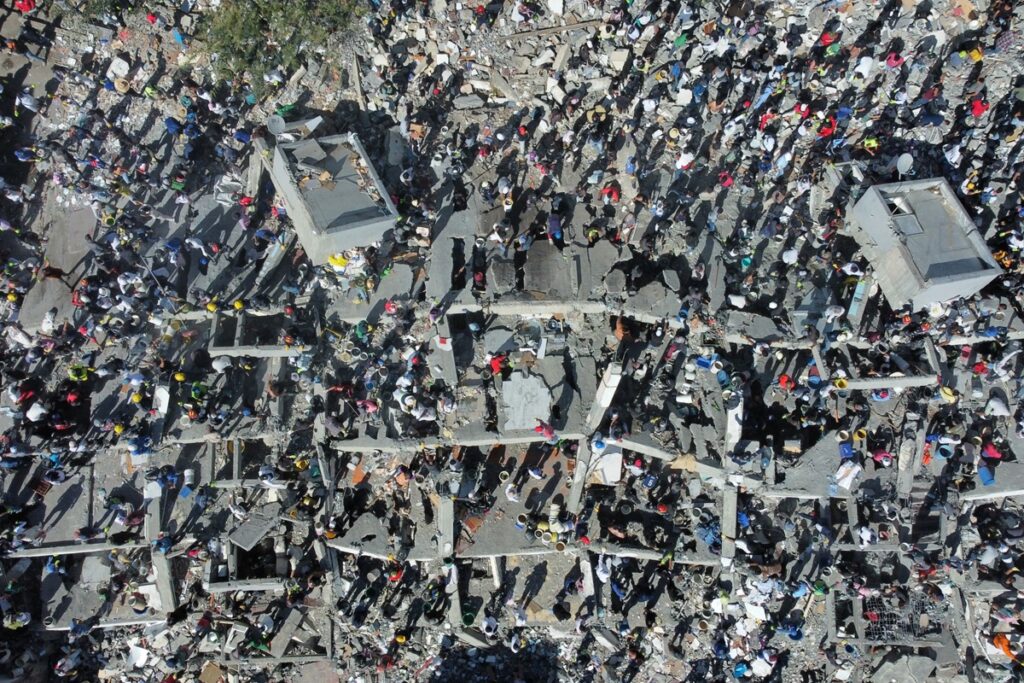
In Pereira, rescuers pulled 32-year-old Daniela Largo alive from the rubble on Aug. 11 after she spent nearly 38 hours trapped inside a collapsed building. Crews spent hours creating an opening through the debris and freeing her arm, which was pinned by a metal door.
The rescue became one of the most prominent signs of hope amid the devastation, as volunteers and specialists worked together to reach people trapped beneath collapsed structures.
Another rescue effort ended in tragedy when a man was recovered from a building in Pereira lifeless and covered with a white blanket.
Aftershocks complicate rescue operations
More than 150 aftershocks had been recorded by Aug. 13, increasing the risks faced by rescue workers operating around damaged and unstable structures.
Across the coffee-growing region, authorities converted sports arenas, schools and other public buildings into shelters for displaced residents. Families in Cali and Pereira have also slept in parks, either because their homes were damaged or because they feared returning to buildings weakened by the earthquake.
“We have the most important things: a roof over our heads, food, water and, in my case, medical care,” said Edith Penagos, 48, who was staying with her teenage son in a tent in a Pereira park.
Rodrigo León Loya, a seismologist and geosciences professor at the University of the Andes, said the probability of another earthquake of similar magnitude occurring in the same area was low but did not rule out additional seismic activity.
“Let’s remember that Colombia is full of active fault lines,” he said. “The question isn’t whether it can happen again. The question is rather when an earthquake of similar magnitude will occur at another of Colombia’s seismic sources.”
Reuters described the earthquake as the most powerful to hit Colombia this century and said it was the country’s strongest earthquake in more than a century when considered against the historical record. The quake’s strike-slip movement generated powerful horizontal shaking that contributed to the destruction of vulnerable structures.
Chocó faces overlapping humanitarian crises
The scale of the disaster remains particularly difficult to establish in Chocó, where poor communications and difficult terrain have complicated the response.
Many communities in the region are remote and can be reached only by river. The earthquake has also struck an area already affected by poverty, displacement and armed conflict involving illegal armed groups.
Humanitarian organizations were already operating in Chocó before the earthquake, including groups supporting communities affected by Colombia’s long-running conflict and displacement.
“This earthquake compounds an already severe humanitarian situation, and there is a need for increased support for the humanitarian response,” said Giovanni Rizzo, Colombia director for the Norwegian Refugee Council.
Maria José Torres, the U.N. resident coordinator in Colombia, said existing humanitarian networks had helped organizations respond rapidly after the earthquake.
“We have a presence on the ground. Therefore, our ability to be there, present with the people, I think, has increased exponentially,” Torres said in a statement on Aug. 11.
In and around Buenaventura, northwest of Cali, humanitarian workers reported that some communities had struggled to receive assistance. Residents in affected areas have also faced shortages of basic services, including water, gas and electricity.
The combination of earthquake damage, limited infrastructure and insecurity has made access one of the central challenges of the relief operation.
International aid expands
Foreign governments and international organizations have stepped up assistance as Colombia’s emergency response enters a new phase.
The United States initially announced $15.5 million in emergency assistance for shelter, food and protection and activated a Disaster Assistance Response Team. U.S. assistance later increased to $26.5 million, according to reporting on Aug. 14.
Mexico deployed military aircraft carrying relief supplies and security personnel, while additional specialists and search dogs were placed on standby. The European Union separately pledged €2.1 million in emergency humanitarian assistance.
The international response expanded further on Aug. 14, when the World Bank said it had disbursed $200 million to Colombia for emergency response and recovery. The financing is intended to support immediate needs and longer-term recovery, including public health, housing and small and medium-sized enterprises.
The World Bank also launched a rapid assessment of earthquake damage and economic losses to help the Colombian government prioritize reconstruction.
Colombian officials have pushed back against criticism concerning foreign assistance, saying the government has not rejected international offers but will accept international search-and-rescue teams that meet recognized certification standards.
Reconstruction becomes a major test for the new government
De la Espriella has pledged to establish an emergency reconstruction fund to support rebuilding homes, hospitals, schools and infrastructure damaged by the earthquake.
The challenge is particularly significant for a president who campaigned on reducing public spending. The earthquake has instead forced his government to mobilize large-scale emergency resources while preparing for what is expected to be a costly reconstruction program.
Initial estimates reported by Reuters put reconstruction costs at around $6 billion, underscoring the scale of the financial challenge facing Colombia.
For families still waiting for news of missing relatives, however, reconstruction remains a secondary concern.
In Pereira, Enrique Marin traveled more than 10 hours from Bogota after learning that his mother was trapped beneath the rubble of her home.
“My mother was rescued six hours after the earthquake. They pulled her out with vital signs, but she died on the way to the hospital,” Marin said.
He said his mother was found in her pajamas with the house keys still in her hand. The only item he recovered from the destroyed home was a bicycle from his childhood.
Four days after the earthquake, Colombian rescuers and international teams were still searching the ruins for signs of life. The response was moving simultaneously into two difficult phases: a continued effort to find those still trapped and an increasingly urgent campaign to shelter survivors, restore basic services and begin rebuilding communities devastated by the strongest earthquake recorded in Colombia this century.