

The Pentagon is pressing U.S. defense companies to rapidly increase weapons production and accelerate deliveries as the five-month war with Iran consumes critical American munitions, exposing pressure on the U.S. defense industrial base and raising concerns about military readiness for future conflicts.
Deputy Defense Secretary Steve Feinberg directed defense industry leaders on Aug. 5 to submit plans within 21 days for faster production and delivery of critical weapons, according to a Defense Department memo obtained by The Washington Post.
The directive comes as new reporting from Reuters indicates that the U.S. Army has used “virtually all” of its Army Tactical Missile Systems, or ATACMS, and Precision Strike Missiles, or PrSMs, according to two people familiar with the data.
The reported depletion of long-range precision missiles adds to sharp reductions in U.S. inventories of Patriot and Terminal High Altitude Area Defense, or THAAD, interceptors. Tomahawk cruise missile stocks have also fallen substantially during the conflict.
Together, the drawdowns have intensified questions about Washington’s ability to sustain military operations against Iran while preserving sufficient weapons for other contingencies.
Pentagon spokesman Sean Parnell said Aug. 8 that the department was actively focused on increasing munitions acquisitions to provide “the weapons our warfighters need at the pace the threat demands.”
Feinberg’s memo instructed defense companies to “drive significantly faster, more aggressive delivery schedules and/or increased production for critical capabilities.”
“Years-long development cycles are not acceptable,” Feinberg wrote. “We must dramatically accelerate our program schedules and expand our production capacity now.”
US has used ‘virtually all’ ATACMS and PrSM missiles
Reuters reported Aug. 4 that the U.S. Army had used up much of its worldwide stockpile of highly accurate long-range missiles during the war with Iran, citing three people familiar with the data.
Two of those sources said the United States had used “virtually all” of its ATACMS and PrSM missiles. The extent to which the military’s stocks of the two systems have been depleted had not previously been publicly reported.
The exact number of missiles remaining was not disclosed.
The weapons cost more than $1 million each and allow U.S. forces to conduct accurate strikes from a distance, reducing the need to expose piloted aircraft to enemy air defenses.
ATACMS have played an important role in the war in Ukraine, where U.S.-supplied missiles have allowed Ukrainian forces to strike targets inside Russia. PrSM is a newer generation of surface-to-surface missile intended to replace ATACMS and has a longer range.
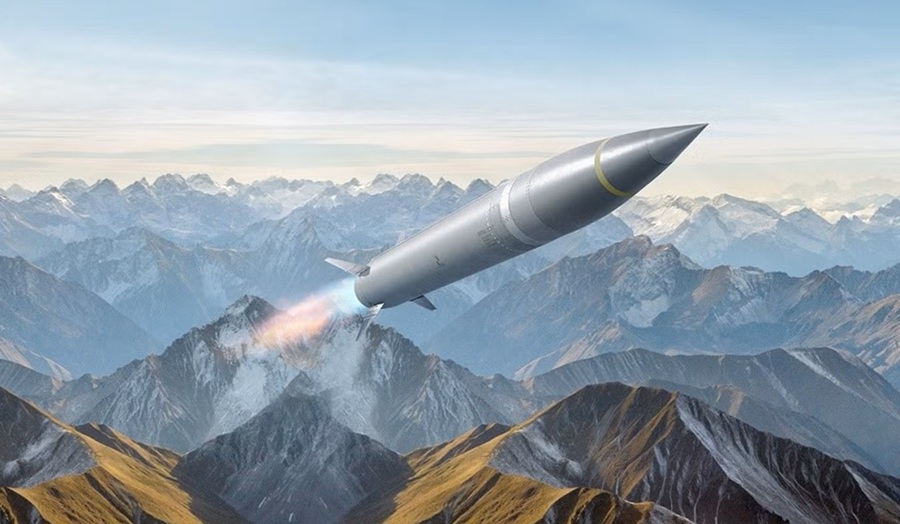
The reported depletion could have consequences beyond the Iran war. Long-range precision weapons are particularly valuable against adversaries with sophisticated air-defense networks, including Russia and China.
The three people familiar with the matter expressed concern that declining missile inventories could limit the U.S. ability to deter or respond to future threats.
A fourth person familiar with the matter offered a more reassuring assessment, saying the United States could resupply despite the high expenditure of precision weapons. U.S. Central Command, which oversees American forces in the Middle East, has been able to replenish supplies by drawing on U.S. military stocks located elsewhere around the world.
Patriot, THAAD and Tomahawk stocks under pressure
The depletion of offensive missiles comes alongside major reductions in U.S. air-defense stocks.
The Center for Strategic and International Studies estimated that the United States had 2,330 Patriot interceptors before the war. CSIS estimated that the number had fallen to 1,030 when an April ceasefire took effect.
Following subsequent fighting, CSIS estimated the remaining stockpile at between 759 and 827 missiles, a decline of at least 65% from the prewar level.
THAAD inventories have also fallen substantially. The United States had 452 THAAD interceptors before the war, according to CSIS. The estimated stockpile fell to between 232 and 262 by the beginning of the April ceasefire.
The United States subsequently replenished some of its inventory, bringing the estimated stockpile to between 234 and 278 interceptors. Even so, the figure remained at least 38% below the prewar level.
CNN reported Aug. 5, citing sources familiar with the latest inventory report, that the U.S. military had exhausted nearly 80% of its THAAD inventory compared with prewar levels and roughly half of its Patriot interceptors.
The different estimates use different measurements of inventory depletion, but they point to the same broader trend: U.S. stocks of key missile-defense weapons have fallen sharply during the conflict.
Reuters reported that two sources familiar with internal U.S. government data said the CSIS estimates broadly matched figures circulating inside the government.
Military leaders have warned the president for weeks about declining stocks of defensive weapons, including Patriot interceptors, according to two sources cited by Reuters.
The U.S. Navy’s Tomahawk cruise missile inventory has also been substantially reduced. One source cited by Reuters said the United States had used a little less than half of its worldwide supply of Tomahawk missiles since the start of the war. Reuters said it could not independently verify that figure.
Tomahawks are launched from Navy destroyers, cruisers and submarines and have long provided the U.S. military with a way to strike heavily defended targets without exposing pilots to enemy air defenses.
CNN previously reported in April that the United States had used nearly 30% of its Tomahawk inventory during the early stages of the conflict.
Raytheon, a unit of RTX, has reached a tentative multiyear agreement with the Pentagon aimed at boosting Tomahawk production, alongside increases in other munitions, as Washington seeks to rebuild its stocks.
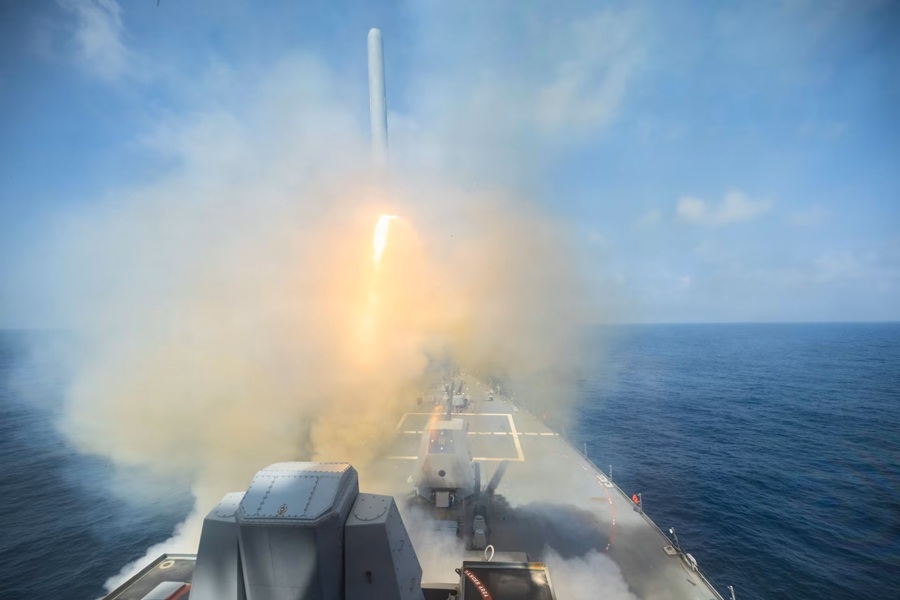
Current fiscal-year delivery schedules cited by CNN indicate that the Pentagon is receiving roughly 15 new Tomahawks and about 20 new Patriot missiles per month.
Munitions shortages complicate escalation decisions
The depletion of U.S. munitions has increasingly become part of the debate over whether Washington can sustain or expand military operations against Iran.
Supply figures circulated inside the federal government during the week of July 27 amid discussions within the Trump administration about how long the United States could continue striking Iran without reducing inventories to levels that could limit the military’s ability to respond to crises elsewhere, according to Reuters.
Military leaders had already raised concerns about dwindling stocks of defensive weapons during discussions about possible escalation.
The issue surfaced again before Trump decided not to proceed with planned major strikes over the weekend of Aug. 1.
Trump had been preparing to authorize a major new round of strikes, with Defense Secretary Pete Hegseth receiving a final “go ahead” order on July 31, according to a senior Trump administration official cited by CNN.
Trump subsequently backed away after discussions with Middle Eastern allies, who warned about possible Iranian retaliation against energy infrastructure.
A U.S. official disputed accounts that munitions shortages were a principal factor in the decision, saying Trump instead responded to pressure from Gulf states.
The possibility of renewed strikes remains open.
One Reuters source said the drawdown of ATACMS and PrSM stocks reflected the Trump administration’s preference for using precision missiles rather than relying on riskier methods such as piloted aircraft dropping bombs against Iranian targets.
Because long-range precision missiles allow strikes from a distance, a shortage could force U.S. commanders to rely more heavily on other weapons and delivery methods if large-scale attacks resume.
The White House has rejected reports that U.S. military inventories are dangerously low.
Asked by Reuters about the stockpile data, the White House issued a statement from President Donald Trump, who said the United States had “far more munitions than anyone in the world” and “far more than we need.”
“Our defense companies are, at this moment, making more munitions than they have ever made before, in addition to expanding their plants and equipment at record levels,” Trump said.
Trump also wrote on Truth Social on Aug. 6 that the United States has “massive amounts.” He added that “large amounts are being manufactured and shipped to the U.S. as needed.”
Pentagon spokesman Sean Parnell likewise rejected the suggestion that U.S. military capabilities were inadequate.
“America’s military is the most powerful in the world and has everything it needs to execute at the time and place of the President’s choosing. We have executed multiple successful operations across combatant commands while ensuring the U.S. military possesses a deep arsenal of capabilities to protect our people and our interests.”
White House spokesperson Anna Kelly told CNN that the US military “has more than enough munitions, ammo, and stockpiles to serve all of President Trump’s strategic goals and beyond.”
“Operation Epic Fury has exposed what happens when you mess with the United States. Even still, the President has urged our defense contractors to constantly produce more made-in-America weapons, which are the best in the world,” Kelly added.
Pentagon moves to expand weapons production
The Pentagon’s response goes beyond replenishing individual weapons. Feinberg’s memo calls for faster delivery schedules, increased production and shorter program timelines.
Parnell said Aug. 8 that the memo was “real” and that it “will inform the fiscal year 2028 budget submitted to Congress for funding, and it is entirely consistent with our ongoing push to rebuild the defense industrial base.”
The Pentagon says the initiative is part of a broader effort to modernize procurement and rebuild the U.S. defense industrial base that predates the current phase of the Iran war.
The conflict has nevertheless increased the urgency of that effort.
High-end missiles require specialized manufacturing capabilities, components and lengthy production cycles. Increasing output therefore does not immediately restore inventories once large quantities have been consumed.
CSIS estimates that rebuilding U.S. THAAD inventories to their prewar level could take three or more years.
Other missile programs could recover more quickly. CSIS estimates that inventories of PrSM and the Joint Air-to-Surface Standoff Missile could return to prewar levels by mid-to-late 2027.
PrSM production is already being expanded as the Army phases out ATACMS. Reuters reported that the Army has ordered a large number of PrSM missiles for 2027, although the PrSM stockpile was relatively small before the war because the weapon is comparatively new.
The Defense Department also announced two deals during the week of Aug. 3 aimed at expanding rocket-motor manufacturing for Patriot and THAAD systems. The Pentagon has not provided a detailed timeline for when those investments will translate into substantially higher missile deliveries.
The Army is also attempting to shorten the testing process for emerging weapons technologies.
On Aug. 7, Army Secretary Dan Driscoll said private companies could receive faster access to military testing ranges for missiles, drones and counter-drone systems. The Army said companies could receive access within 30 days of submitting a request, compared with delays that have traditionally lasted 12 to 18 months.
“It can take 12 to 18 months for a company that wants to go test the thing that can make a soldier’s life better, that can increase their lethality and that can keep them safer,” Driscoll said. “That is not sufficient.”
The measures reflect a broader effort to shorten the timeline from weapons development and testing to procurement and large-scale production.
Gulf allies face air-defense risks
The effects of U.S. weapons shortages extend to American allies in the Middle East.
Several Gulf countries rely on U.S.-supplied air-defense systems and have expressed concern that shortages could limit their ability to intercept Iranian missiles and drones.
Those concerns could become particularly acute if Iran responds to renewed American attacks by targeting energy infrastructure or other strategic sites across the Gulf.
CSIS has warned that reduced stocks of Patriot and THAAD interceptors could force U.S. and allied forces to make difficult decisions about which incoming threats to engage.
Using fewer interceptors could conserve scarce weapons, but it would also increase the possibility that some Iranian missiles or drones penetrate defensive systems.
The result is a strategic dilemma for Washington: continued use of scarce interceptors can protect forces and allies in the short term while reducing the stockpile available for future attacks.
Implications for future conflicts
The consequences of depleted inventories extend beyond Iran.
ATACMS, PrSM, Patriot, THAAD and Tomahawk missiles all occupy important roles in U.S. military planning for potential conflicts involving other major adversaries.
The depletion of long-range precision weapons could be particularly consequential in a conflict with China, where U.S. forces could face sophisticated air defenses and long distances across the Indo-Pacific.
The same concern applies to potential conflicts involving Russia or North Korea.
Reuters reported that sources familiar with the matter were concerned that declining missile supplies could limit the United States’ ability to deter adversaries including Russia and China.
One source familiar with the stockpile concerns described the risk posed by dwindling interceptors in stark terms.
“The lack of interceptors means that conventional attacks can backfire if the suicide drones start making it through in-masse,” the source said. “Tit-for-tat will never end this.”
The broader issue is whether the United States can sustain combat operations against Iran while retaining enough weapons to deter or respond to another major crisis.
For Washington, rebuilding depleted inventories has therefore become both an immediate readiness requirement and a longer-term defense-industrial priority.