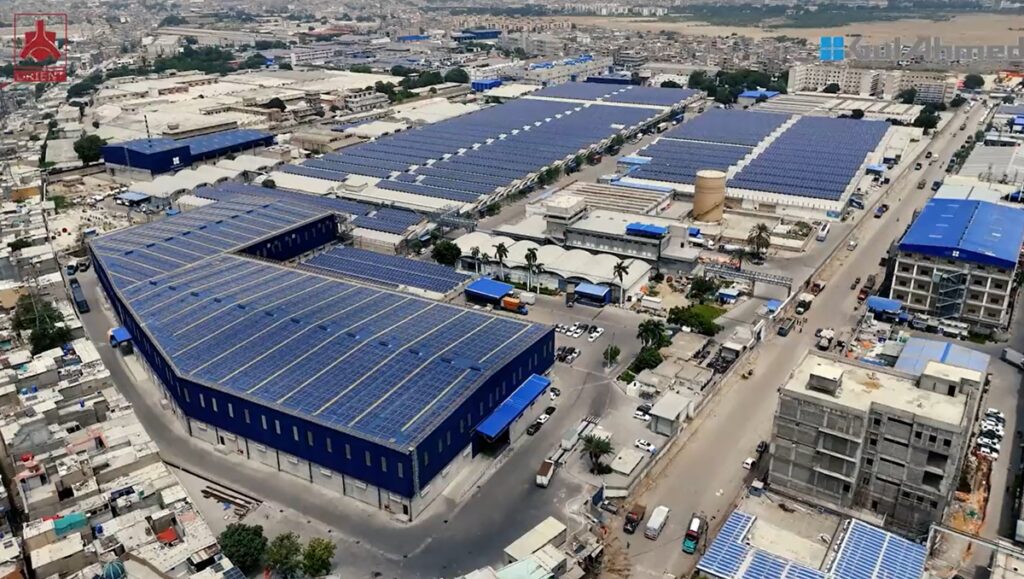
Pakistan’s rapid adoption of solar energy is emerging as one of the most significant energy transitions in the developing world, driven not by sweeping state intervention but by consumers responding to soaring electricity costs, repeated power shortages, and volatile global fuel markets.
In just over a decade, the country has moved from negligible solar generation to a position where solar now forms a substantial part of its energy mix. Analysts say the transformation accelerated after Russia’s invasion of Ukraine in 2022 disrupted liquefied natural gas (LNG) markets and sharply increased global fuel prices.
The latest Middle East conflict has further exposed the vulnerability of Asian economies heavily dependent on imported oil and gas while strengthening the case for renewable energy as a tool for economic resilience and energy security.
“Solar PV is the low-hanging fruit for today’s crisis: accessible, inherently local, and simple to deploy, making it the most geopolitically resilient energy source available,” said Vicky Janita, a senior energy systems analyst at Rystad Energy.
From Energy Shortages to Solar Expansion
Pakistan’s solar boom coincided with a dramatic drop in the cost of Chinese-made solar panels, aided by Pakistan’s zero-tariff import policies and favorable net-metering incentives.
Frustrated by high consumer costs and unreliable service, the Pakistani public bypassed formal municipal channels. Leveraging a state-backed zero-tariff policy on solar imports and an initial, highly lucrative net-metering framework, consumers deployed private funds to secure energy independence.
Under Pakistan’s net-metering system, households and businesses generating excess solar electricity can feed power back into the national grid in exchange for credits. The policy triggered widespread rooftop solar adoption across homes, factories, schools, and farms.
According to a 2023 Gallup Pakistan survey, approximately 15% of households, roughly four million homes, were already using solar power in some form. By 2025, a Pakistan Bureau of Statistics survey found that the number had climbed to 25% of households nationwide.
Government figures also show that more than 280,000 consumers are connected through net-metering systems, with the number continuing to rise annually.
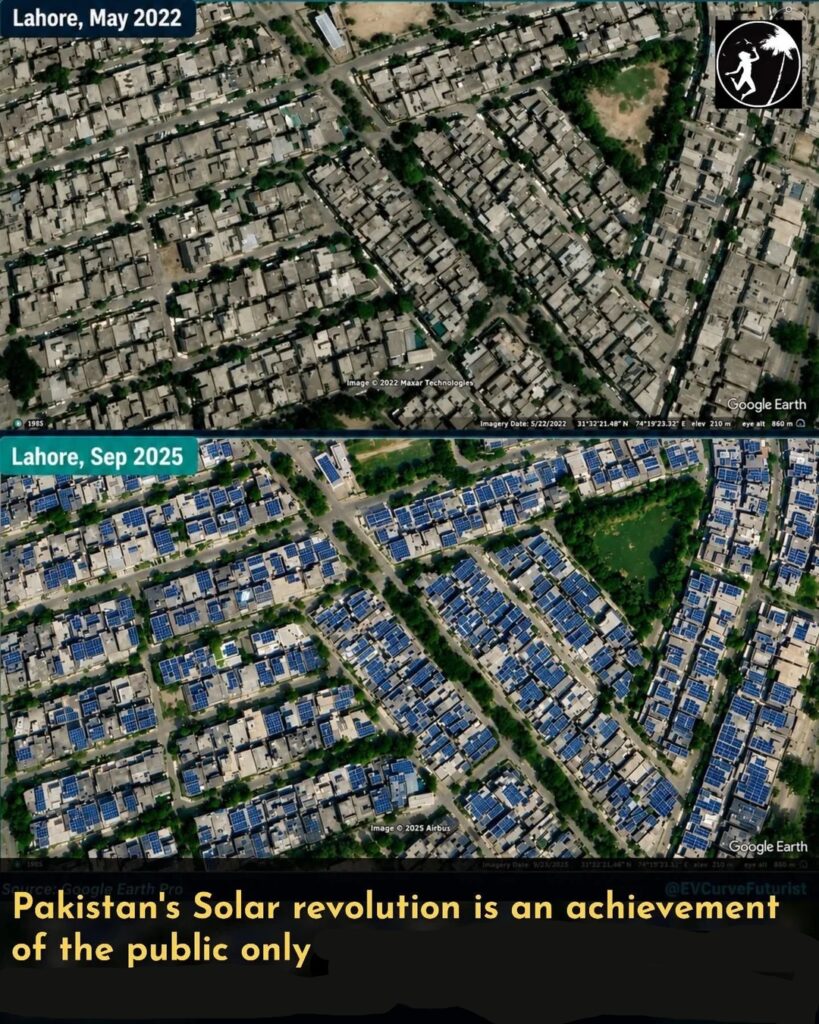
Since 2023, Pakistan has imported roughly 41 gigawatts (GW) of solar panels from China, according to Ember data. By early 2026, cumulative solar imports had reached approximately 51GW, making Pakistan one of the world’s fastest-growing solar markets.
“Pakistan is the poster-child for the solar revolution,” said Kingsmill Bond, an analyst at the energy think tank Ember. “Pakistan has done the sensible thing for themselves, and they’ve imported solar panels, and that has enabled them to reduce their gas burn.”
Solar cushions Pakistan from global fuel shocks
As the ongoing Middle East conflict disrupts global energy markets and threatens fuel supplies passing through the Strait of Hormuz, analysts say Pakistan’s investment in solar and battery storage has helped soften the economic impact.
Nearly 80% of the oil transiting through the Strait of Hormuz is destined for Asia, making the region particularly vulnerable to supply disruptions and price spikes.
Pakistan still depends heavily on imported fossil fuels, especially LNG from Qatar, but renewable growth has reduced some of that exposure.
Pakistan’s Energy Minister Awais Leghari told Reuters that “the people-led solar revolution” alongside investments in hydropower, nuclear energy, and domestic coal had reduced the country’s vulnerability to global LNG supply disruptions.
“The people-led solar revolution and earlier decisions to invest in nuclear, hydropower and local coal have all played a role in increasing Pakistan’s self-reliance,” Leghari said.
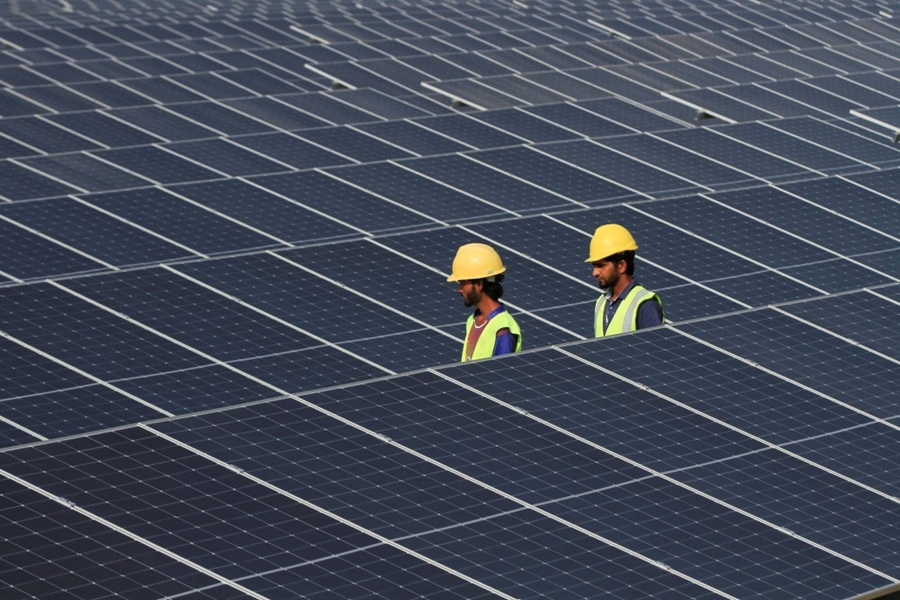
According to Renewables First and the Centre for Research on Energy and Clean Air, Pakistan has saved an estimated $12 billion in avoided oil and gas imports since 2018 and could save an additional $6.3 billion by the end of 2026.
Nabiya Imran, an energy analyst at Renewables First, said the rapid spread of solar and battery systems has effectively created a protetive buffer against global fuel volatility. “The widespread adoption of solar and batteries kind of serves as a hedge or a protection sort of against these price shocks that the fossil fuel markets are very vulnerable to globally,” she said. “Which kind of makes Pakistan’s energy transition story not just a story about climate, but also a story about risk management for energy security.”
China’s central role in Pakistan’s solar boom
Analysts say Pakistan’s solar transformation is closely tied to China’s dominance in the global solar manufacturing supply chain.
China controls roughly 80% of the global solar industry supply chain and has flooded international markets with low-cost solar modules and lithium-ion batteries.
In Pakistan, the falling price of imported technology dramatically accelerated adoption. In the early 2010s, solar panels cost between PKR 100 and PKR 120 per watt. Today, prices have fallen to roughly PKR 30 per watt.
The solar imports from China increased from less than 1GW in 2018 to approximately 51GW by early 2026, making Pakistan one of the world’s fastest-growing solar markets.
| Pakistan Generation Capability Breakdown Source Type | Capacity Factor |
| Total Chinese Solar Imports (Cumulative 2018–2026) | 51 GW |
| Conventional Legacy Grid Assets (All Non-Solar Sources, 2024 Data) | 46 GW |
Falling battery prices have also enabled households to store electricity for nighttime use and reduce dependence on the national grid.
“Pakistan’s solar boom isn’t the story of Pakistan. It is also a China story,” an electrical engineer at the University of Turbat said on condition of anonymity. “These cheap Chinese solar panels are changing the renewable energy sector around the developing countries.”
However, experts warn that while Pakistan is reducing dependence on imported fuel, it may be creating another form of dependency.
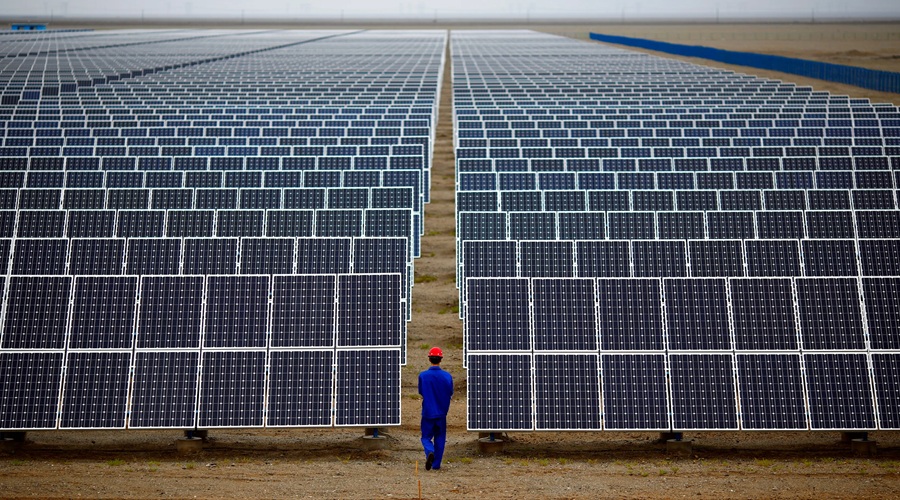
“Without manufacturing solar panels itself, Pakistan is falling into a new form of dependency, this time on imported technology rather than imported fuel,” the engineer warned.
Growing divide in the energy system
Despite the rapid expansion, analysts caution that Pakistan’s solar revolution has exposed deep inequalities within the energy system.
The upfront cost of rooftop solar remains unaffordable for many lower-income households. A standard 3-kilowatt residential system costs around PKR 450,000 ($1,610), while larger commercial systems can exceed PKR 2.2 million ($7,874).
As a result, upper-middle-class households, industries, and commercial users have benefited most from lower electricity bills and improved reliability.
In rural areas, however, solar technology has increasingly become essential infrastructure rather than a luxury. Farmers in Punjab and Balochistan are using solar-powered tube wells to avoid volatile diesel prices and unreliable electricity supplies.
Critics also argue that the current net-metering structure shifts financial pressure onto consumers who remain dependent on the national grid.
Reports suggest that net-metering has already transferred a burden of nearly PKR 159 billion ($570 million) onto traditional grid consumers, many of whom cannot afford solar installations.
Analysts warn that Pakistan risks developing a two-tier energy system – one for solar users with lower energy costs and another for consumers trapped in the conventional grid.
The government has already begun tightening incentives by reducing the buyback rate for new net-metering consumers from approximately PKR 25 per unit to around PKR 11.
- Financial Deficit: Net-metering grid defection has transferred a deficit of PKR 159 billion ($570 million) onto non-solar grid consumers.
- Policy Reversals: To halt this widening fiscal imbalance, the Pakistani government slashed its clean energy buyback rates from PKR 25 ($0.09) per unit down to just PKR 11 per unit for new net-metering signups.
- Technology Trap: By eliminating fuel imports without creating a domestic production sector, Pakistan has swapped a dependence on foreign oil for a long-term structural reliance on imported Chinese engineering and lithium-ion battery packs.
Can other Asian nations replicate Pakistan’s model?
While Pakistan’s experience has attracted global attention, experts caution that replicating the country’s rapid solar expansion elsewhere in Asia may prove difficult.
“It is unlikely that countries will follow Pakistan uniformly,” Imran said. “Only systems with the same pressure points and supply chain conditions are likely to do so.”
Countries such as Indonesia, Thailand, and Vietnam remain heavily tied to coal through long-term infrastructure investments and government subsidies. Analysts say these structural barriers limit the pace of renewable expansion despite growing energy security concerns.
In Indonesia, the world’s third-largest coal mining state, the national government heavily subsidizes coal-fired electricity to maintain domestic tariff stability. Consequently, there is minimal consumer-led economic pressure to invest in rooftop arrays. In the Philippines, logistical friction complicates decentralized infrastructure development. Moving high-tech equipment across an archipelago of more than 7,000 islands introduces deep supply-chain costs.
“Unlike the very rapid spread of rooftop solar seen recently in Pakistan, Southeast Asia is unlikely to see a similar pace of change, because powerful vested interests in the existing energy system and complex regulatory structures in Southeast Asian energy markets slow down how quickly solar and other renewables can be integrated and scaled,” said Christopher Len of the ISEAS-Yusof Ishak Institute.
Still, the ongoing energy crisis is prompting policymakers across Asia to reconsider their dependence on imported fossil fuels.
Ramnath Iyer, Asia sustainable finance lead at IEEFA, said many regional economies missed earlier opportunities to accelerate renewable deployment. “A lot of these problems could have been avoided if Asian countries had switched faster to renewables,” he said.
Dinita Setyawati, a senior energy analyst at Ember, described the current moment as a turning point for Asia’s energy future. “Renewables, grids, but also storage, could be the holy trinity solutions for the energy dilemma for the whole of the Asia region,” she said.
Renewables seen as path to Economic Stability
Energy analysts say the Middle East crisis has fundamentally changed how governments across Asia perceive renewable energy. Renewables are no longer viewed solely as climate policy tools but increasingly as instruments of economic stability, geopolitical resilience, and national security.
“If anything, the crisis will probably motivate more people to adopt rooftop solar as well as battery storage in the future,” Imran said.
“For Pakistan, and I think for a lot of other countries, the energy transition towards renewables is no longer just about climate but it’s a matter of energy security.”