

Turkiye’s first nuclear power plant is targeting a key commissioning milestone in December 2026, as Russia’s state nuclear corporation Rosatom advances preparations to bring the country’s first reactor into the startup phase.
The project is central to Ankara’s efforts to diversify its electricity supply, although its long-running delays and reliance on Russian financing and technology underscore the strategic stakes.
Alexei Likhachev, head of Rosatom, said on October 16 that the first reactor at the Akkuyu nuclear power plant was on track to achieve its first self-sustaining nuclear chain reaction in the second half of December.
“We remain on track for the planned physical start-up in the second half of December… We hope that before the end of the year the Turkish unit will transition from the construction phase to the start-up phase,” he said.
Located in Mersin province on Turkiye’s Mediterranean coast, Akkuyu is being developed under a bilateral agreement signed by Russia and Turkiye in 2010. The project comprises four Russian-designed VVER-1200 reactors with a combined installed capacity of 4,800 megawatts (MW). Once fully operational, the plant is expected to supply approximately 10% of Turkiye’s electricity demand.
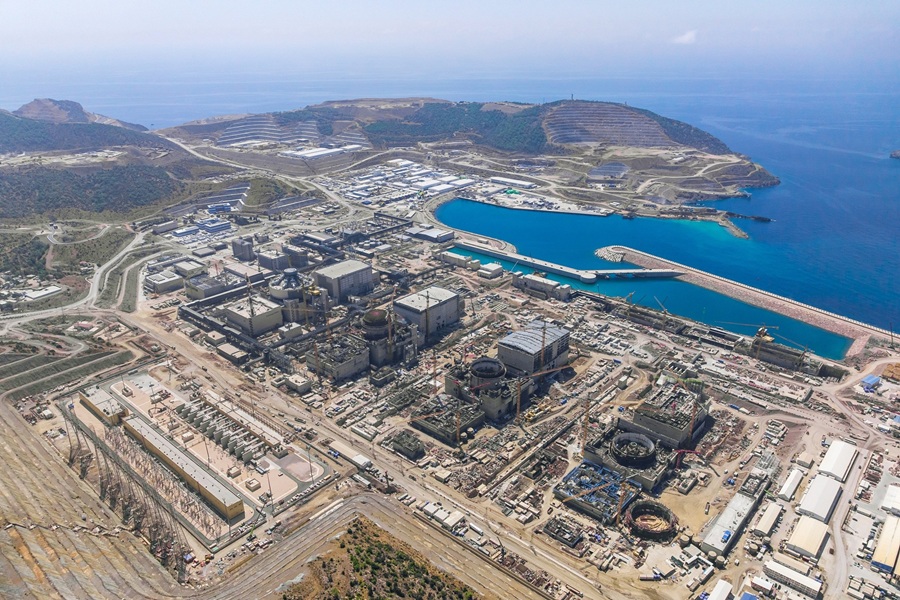
The December target concerns physical startup, not confirmed commercial electricity generation. The reactor must undergo further commissioning and regulatory procedures before it can begin supplying electricity to the grid.
Key Highlights
- December 2026 target: Rosatom expects Unit 1 to achieve its first self-sustaining nuclear chain reaction in the second half of December.
- Project cost: More than $20 billion, with the project financed by Russia.
- Installed capacity: Four VVER-1200 reactors totaling 4,800 MW.
- Expected electricity contribution: Approximately 10% of Turkiye’s electricity demand when the entire plant is operational.
- Latest technical progress: Unit 1 completed primary-circuit hydraulic testing in October 2026, advancing preparations for subsequent commissioning tests.
- Investment discussions: Rosatom has offered the possibility of selling up to a 49% stake to a partner, with potential Turkish investors under discussion.
- Additional nuclear projects: Ankara is pursuing plans for plants in Sinop and Thrace while discussing prospective projects with international partners.
December Target Follows Years of Delays
Akkuyu has faced repeated schedule revisions, with its original 2023 commissioning target pushed back. Although work at the construction site began in 2013, the first unit entered its main construction phase in 2018, when its construction license was issued and foundation concrete was poured.
Preparations have progressed through successive construction and commissioning stages. Fresh nuclear fuel for Unit 1 arrived in 2023, and the unit’s control room simulator was commissioned in October of that year. The plant’s outer containment structure was installed in October 2024.
In October 2026, the project reached another technical milestone when the primary circuit of Unit 1 completed hydraulic testing. The tests assessed the integrity of key components and pipelines under elevated pressure, helping establish their readiness for subsequent commissioning activities.
These tests do not constitute nuclear startup. Fuel loading and the achievement of first criticality remain distinct steps in the commissioning process, followed by grid connection and electricity generation.
The distinction is important because Rosatom’s December forecast concerns the reactor’s physical startup, rather than a guarantee that the facility will be supplying electricity commercially by the end of the year.
Russia-Turkiye Investment Talks Continue
Akkuyu is also a major financial commitment for Moscow and Ankara. Rosatom finances the project and remains its sole owner, while discussions continue over whether a Turkish investor will acquire a stake.
Speaking after discussions with Turkish Energy and Natural Resources Minister Alparslan Bayraktar during Russian Energy Week, Likhachev said Rosatom had developed several possible investment arrangements.
“We have developed a menu of possible arrangements for a Turkish investor. The choice is primarily up to the Turkish government. I hope that following our meeting, Mr Bayraktar will brief the country’s leadership and that the right decisions will be taken.”
Rosatom can sell up to a 49% stake in Akkuyu to a partner, potentially sharing the project’s investment burden. The company said in April that it had resumed talks with Turkish firms about joint ownership.
No final ownership agreement was established in the supplied reporting. The terms of a possible transaction and the identity of any investor remain unresolved.
The project has also faced financial and logistical risks associated with the geopolitical fallout from Russia’s war against Ukraine. Although Rosatom has not been directly targeted by Western sanctions, Reuters reported that payment-related and other challenges remain.
A potential Turkish investment could broaden local participation in the project, but it would not by itself resolve the technical and regulatory requirements that must be met before the plant enters commercial operation.
Ankara Plans Further Nuclear Development
Turkiye’s nuclear ambitions extend beyond Akkuyu. Ankara is planning additional nuclear power plants in Sinop, on the Black Sea coast, and in the Thrace region in the country’s northwest.
The government has said it remains in discussions with Canada, China, Russia and South Korea over prospective projects. The talks offer Turkiye opportunities to assess different partners and technologies as it seeks to expand nuclear generation.
Akkuyu’s commissioning and eventual operation could provide experience relevant to future projects, including nuclear plant management, technical oversight and integration into the national electricity system.
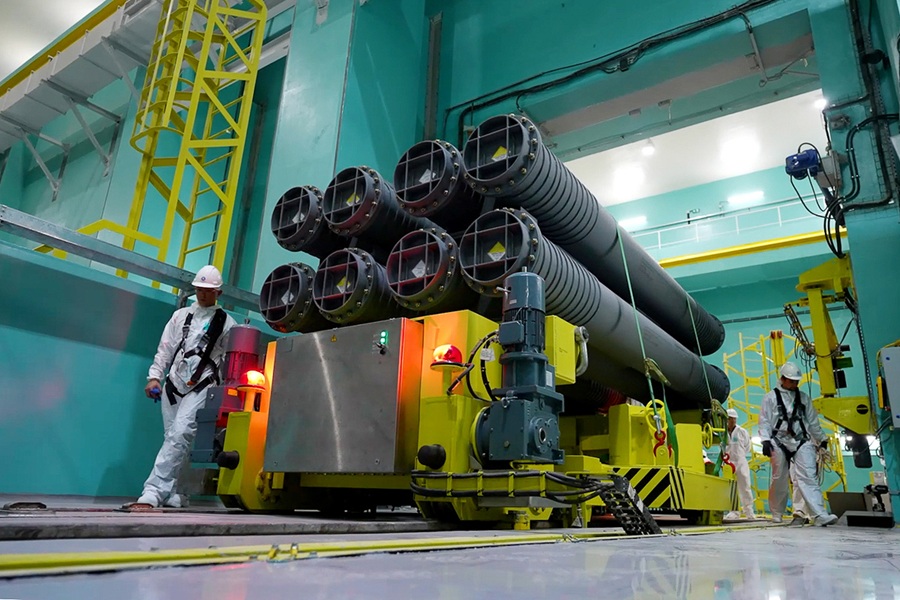
The plant is designed around four VVER-1200 reactors, a Russian-developed generation III+ reactor type. According to the project company, the facility has a planned service life of 60 years, potentially extendable by another 20 years.
However, the project’s progress should be assessed against actual commissioning milestones, regulatory approvals and operational performance. Its projected contribution to Turkiye’s electricity supply will depend on all four units becoming operational.
LNG Cooperation Adds to Energy Security Strategy
Turkiye is also exploring additional options for securing its natural gas supplies.
Bayraktar said on October 16 that he had discussed potential cooperation in liquefied natural gas (LNG) with the chairman of Novatek, Russia’s largest LNG producer, during a meeting in Moscow.
In a post on X, Bayraktar said Ankara would continue taking steps to increase Turkiye’s energy diversity and consolidate its supply security.
Turkiye consumed 59 billion cubic meters of natural gas in 2025, according to the supplied reporting, and relies on imports for most of its gas requirements. The country has signed long-term supply agreements with major LNG producers in recent years but does not have a comparable agreement with Novatek.
The discussions do not confirm that a new supply contract has been agreed. They nevertheless indicate that Ankara is continuing to explore potential arrangements with additional suppliers.
Nuclear power and LNG serve different roles in Turkiye’s energy system. Akkuyu is intended to provide electricity from nuclear generation, while LNG agreements can help diversify the country’s natural gas supply. Both form part of Ankara’s wider effort to strengthen energy security and manage dependence on imported fuels.
Strategic Implications for Moscow and Ankara
Akkuyu represents a long-term partnership in civilian nuclear energy between Russia and Turkiye. For Ankara, the plant offers the prospect of a substantial new electricity source and an opportunity to develop domestic experience in nuclear power. For Moscow, it maintains a major technological and commercial relationship with a strategically important regional power.
The partnership also presents Turkiye with a strategic balancing challenge. Expanding nuclear generation can diversify its electricity mix, but reliance on Russian financing, reactor technology and project ownership creates a continuing relationship with Moscow.
The immediate milestone is whether Unit 1 achieves first criticality in December, as Rosatom expects. Further commissioning and regulatory steps will determine when the reactor can connect to the grid and begin generating electricity.
If the target is met, it will mark an important advance in Turkiye’s nuclear energy program. The plant’s wider significance will ultimately depend on the successful transition to commercial operation, the resolution of outstanding investment questions and the reliable performance of all four units.