

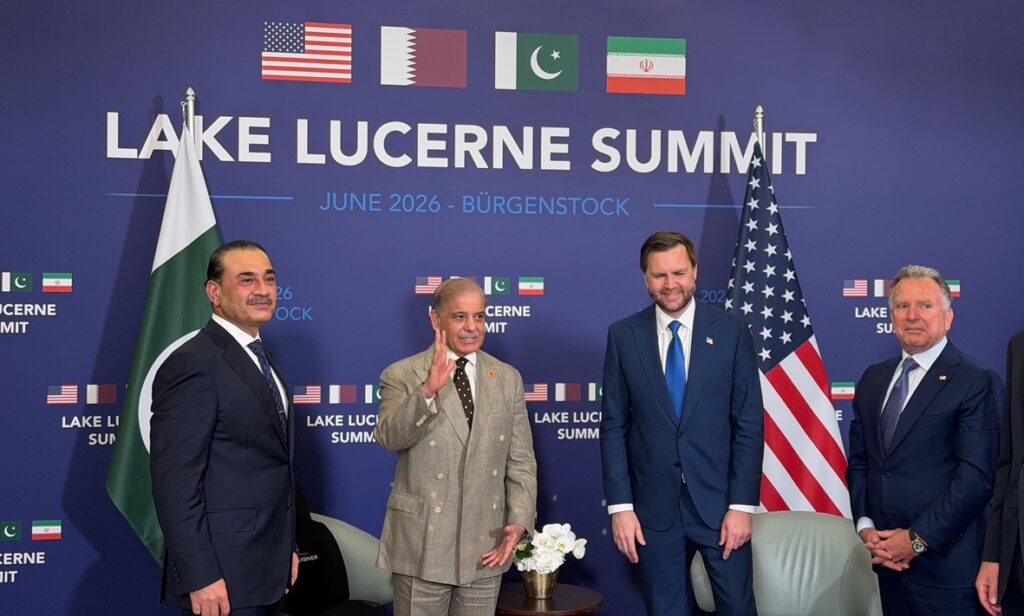
U.S. Vice President JD Vance said on June 22 that negotiations between U.S. and Iranian officials in Switzerland had established a “good foundation for a successful final deal” aimed at ending months of conflict and reducing tensions across the Middle East.
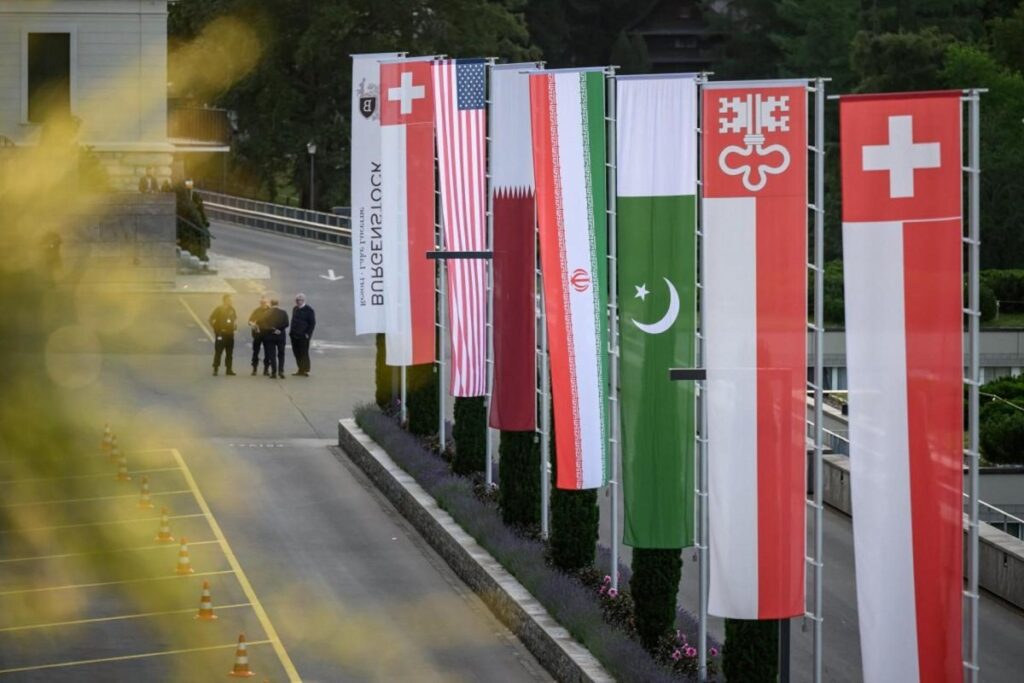
The talks, held at what participants dubbed the Lake Lucerne Summit, brought together senior U.S. and Iranian officials with mediation support from Qatar and Pakistan. While no final agreement was reached, both sides reported progress on several key issues, including maritime security in the Strait of Hormuz, mechanisms to manage regional flashpoints, and arrangements for future technical negotiations.
“We haven’t built the house, but we’ve laid a successful foundation to get to a good place for the American people,” Vance told reporters following discussions with Iranian Parliament Speaker Mohammad-Bagher Ghalibaf.
The negotiations followed an interim agreement signed the previous week that established a 60-day window for talks on major issues, including Iran’s nuclear program, sanctions relief, regional security, and the conflict involving Israel and Hezbollah in Lebanon.
Four Key Objectives Achieved, Vance Says
Vance said the U.S. delegation entered the talks with four primary objectives and claimed all had been accomplished.
The first objective was creating a mechanism to keep the Strait of Hormuz open and prevent disputes in the strategically important waterway from escalating into a broader conflict. According to Vance, oil and gas shipments through the strait have already increased, and negotiators established a framework to address future incidents.
The second goal focused on maintaining a regional ceasefire and creating communication channels to rapidly address outbreaks of violence.
“We wanted to make sure that if there is shooting … we’re actually talking to each other and figuring out how to stop the shooting,” Vance said.
The third objective centered on nuclear transparency. Vance described Iran’s reported agreement to allow inspectors from the International Atomic Energy Agency (IAEA) back into the country as a major breakthrough.
“The Iranians have agreed to invite IAEA inspectors back into their country. That is a major milestone for the American people,” Vance said.
The fourth objective involved establishing the structure for technical negotiations that will continue over the coming weeks. Vance said U.S., Iranian, Qatari, and Pakistani officials made substantial progress creating oversight mechanisms and working groups to support those discussions.
“The final deal is the house. We set the foundation,” Vance said. “We haven’t built the house, but we’ve laid a successful foundation to get to a good place for the American people.”
Lebanon Ceasefire Mechanism Emerges as Early Test
A central component of the negotiations focused on Lebanon, where fighting between Israel and the Iran-backed Hezbollah movement has threatened to widen regional instability.
According to a joint statement issued by Qatar and Pakistan, participants agreed to establish a “High Level Committee” to oversee negotiations and a “de-confliction” mechanism involving the United States, Iran, and Lebanon.
The mechanism is intended to support the termination of military hostilities and provide channels for communication during periods of heightened tension.
“We want a regional ceasefire,” Vance said. “We want Hezbollah to stop firing at our friends in Israel. We want Israelis to be able to live in peace. We also want to make sure that when things happen, they don’t spiral into a broader escalation.”
He added that the framework is designed to protect both Israeli security and Lebanese sovereignty.
“We want Israel’s security to be protected, and we also want Lebanon’s sovereignty to be protected. And this is going to be an ongoing conversation,” Vance said.
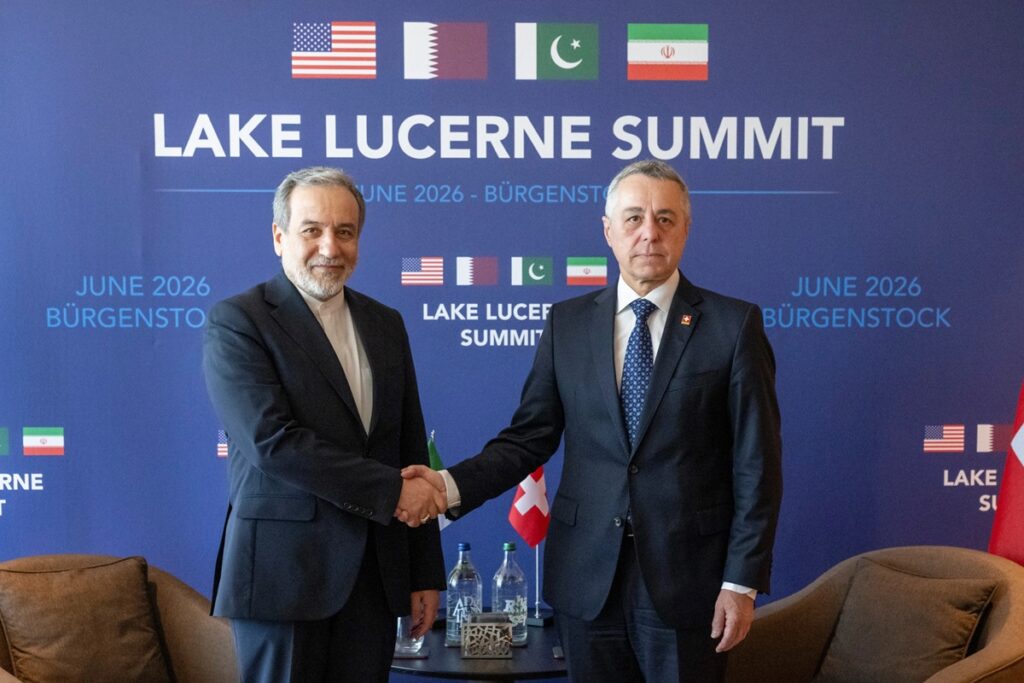
Iranian Foreign Minister Abbas Araghchi also highlighted Lebanon as a critical issue, describing progress toward ending the conflict as a significant outcome of the talks. In a post on X, Araghchi said negotiators achieved “major progress” and described the Lebanon deconfliction mechanism as the first “real test” of the broader diplomatic effort.
As of June 22, the ceasefire between Israel and Hezbollah appeared to be holding. Tilak Pokharel, a spokesperson for the United Nations Interim Force in Lebanon (UNIFIL), said peacekeepers had not detected hostile trajectories from either side since the previous day, although airspace violations and Israeli military movements continued.
Strait of Hormuz Remains Central to Negotiations
The Strait of Hormuz remained one of the most sensitive topics throughout the discussions.
Iran effectively closed the strategic waterway following U.S. and Israeli military operations on Feb. 28, disrupting global energy markets and driving fuel prices sharply higher. Although an interim agreement called for the reopening of the passage, vessels have continued to avoid the central shipping route because of remaining mines.
According to maritime analytics firm Kpler, 71 confirmed vessel transits were recorded over the weekend, including 35 crossings on June 21. Before the conflict, between 100 and 130 ships typically transited the strait each day.
Ships have increasingly relied on alternative routes through Iranian and Omani waters to avoid hazardous areas.
The negotiations also addressed conflicting claims regarding the strait’s status. Iranian officials and state media had indicated that restrictions could remain in place until a ceasefire in Lebanon was secured and sanctions relief was granted. U.S. Central Command rejected assertions that Iran had again closed the waterway, stating that Tehran does not control the strait.
Temporary Oil Sanctions Relief Announced
The U.S. Treasury Department on June 22 issued a 60-day general license authorizing the production, delivery, and sale of Iranian oil through Aug. 21.
The measure temporarily eases restrictions on Iranian crude oil and petroleum products while negotiations continue. Notably, the license permits Iranian oil imports into the United States, which has not imported significant volumes of Iranian crude since the 1990s.
Treasury Secretary Scott Bessent cited progress in the negotiations when announcing a temporary sanctions waiver. “In line with the ongoing productive talks in Switzerland, Iran has committed to free and open transit in the Strait of Hormuz and to permit International Atomic Energy Agency (IAEA) inspectors into their country,” Bessent wrote on X.
Bessent said the move was linked to diplomatic progress achieved in Switzerland and Iran’s commitments regarding maritime security and nuclear inspections.
Vance also suggested that future sanctions relief could include controlled access to frozen Iranian assets for purchases of U.S. agricultural products, including soybeans, corn, and wheat.
According to Vance, the concept was developed by Jared Kushner and Qatari officials and would place restrictions on how released funds could be used.
“That money is not going to be unfrozen unless we continue to see progress,” Vance said.
Iran has not publicly commented on the proposal.
Trump Remarks Create Friction but Talks Continue
The negotiations were briefly disrupted by comments from President Donald Trump, whose public statements drew criticism from Iranian officials despite his absence from the talks.
Iranian state media reported that discussions paused following the “publication of an insulting message by the U.S. President.”
Trump posted on social media during the negotiations: “Iran must immediately stop their highly paid PROXIES in Lebanon from causing trouble. If they don’t, we’ll hit Iran very hard again, just like we did last week, only harder!!!”
He also reportedly warned Iranian President Masoud Pezeshkian after the Iranian leader reiterated Tehran’s position on uranium enrichment.
Vance dismissed suggestions that Trump’s comments endangered the talks.
“No, they didn’t throw a wrench in the system,” Vance said.
“Yes, they did threaten to walk out, or at least there were social media threats that they would walk out. But we were negotiating well past one in the morning yesterday, so they didn’t walk out.”
At another point, Vance remarked: “There was a little bit of whining from the Iranians. But I think that’s to be expected.”
He later added: “What we told the Iranians yesterday is when you guys engage in what us millennials might call trash talk, you can’t expect the president of the United States not to respond and not to correct the record.”
Technical Talks Shift Into Next Phase
Although senior-level discussions concluded on June 22, negotiators emphasized that substantial work remains.
Technical teams led by U.S. envoys Jared Kushner and Steve Witkoff will continue discussions over the coming weeks as negotiators seek a comprehensive agreement before the 60-day deadline expires.
“We’ve had robust discussions on all elements of the nuclear deal. We plan to continue working through each of these issues and using today’s work as a starting point for ongoing technical talks going forward,” a senior U.S. diplomat involved in the talks said.
Vance characterized the discussions as “a productive 36 hours” and reiterated that future progress would depend on implementation rather than promises.
“Whether good faith or bad faith, you can’t trust anybody’s words. You have to trust what they actually do,” Vance said.
Meanwhile, U.S. Secretary of State Marco Rubio is scheduled to visit the United Arab Emirates, Kuwait, and Bahrain from June 23-25 to consult with regional partners on the negotiations, maritime security in the Strait of Hormuz, and broader efforts to preserve stability across the Gulf.
As diplomatic efforts continue, officials on all sides have framed the Switzerland talks as an important starting point rather than a final settlement. “A lot of progress, but still some work to do,” Vance said.