

Global electric-vehicle sales rose for a sixth consecutive month in August, with Europe providing the strongest growth among major markets as weaker sales in North America and China limited the overall increase, according to data from Benchmark Mineral Intelligence.
Global sales of battery-electric and plug-in hybrid vehicles reached 1.83 million in August, up 2% from a year earlier and down 1% from July. Sales for the first eight months of 2026 reached 13.4 million, 4% higher than in the same period last year.
The regional picture was sharply divided. Europe recorded 380,000 EV sales in August, up 36% year over year, while North America registered about 140,000, down 33%. China remained the largest market, with 1.03 million sales, but volumes were 11% below August 2025.
Charles Lester, data manager at Benchmark Mineral Intelligence, said: “Global EV sales growth cooled sharply in August, rising just 2% year-on-year to 1.83 million units, as a deepening contraction in North America offset continued double-digit growth in Europe and an improving picture in China. Year-to-date sales now stand at 13.4 million units, up 4% on the same period last year.”
Europe Leads Major Markets
Europe continued to post the strongest growth among the major EV markets. August sales rose 36% from a year earlier, although they fell 15% from July as the region’s summer slowdown extended into August.
European EV sales reached 3.3 million units from January through August, representing 29% growth from the same period in 2025.
Lester said: “Europe remained the strongest performing region, with EV sales up 36% year-on-year in August, even as the region’s holiday-driven slowdown that began in July carried into August, with sales down 15% month-on-month. The continued strength of subsidy-backed demand in the region’s major markets pushed year-to-date growth up to 29%, from 28% at the end of July.”
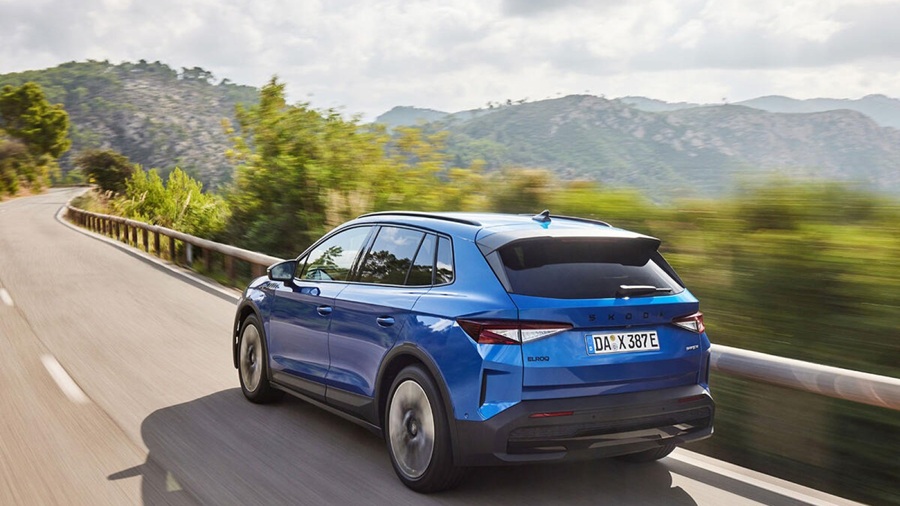
France, Germany and the UK, which together account for more than half of European EV sales, continued to benefit from purchase incentives, cheaper models and, in several markets, elevated fuel prices. France reached a record 41% EV penetration rate in August.
Spain’s new Auto+ subsidy scheme also entered its first full month of operation. Applications opened Aug. 4, with eligibility retroactive to Jan. 1, 2026.
The centrally administered program offers a maximum base subsidy of €4,500 ($5,190) for a new EV passenger car and has a €400 million ($465 million) budget through 2026. It replaced the regionally administered MOVES III program, which expired at the end of 2025.
Spain’s EV penetration had risen from 18% in 2025 to 20% year to date in 2026 before the new scheme’s first full month, according to Benchmark.
North America Posts Sharp Decline
North American EV sales fell 33% year over year in August, the steepest annual decline recorded by the region so far this year. Year-to-date sales were down 21%.
The decline was driven primarily by the U.S. market and the difficult comparison with August 2025, when consumers accelerated EV purchases ahead of the expiration of the federal EV tax credit at the end of September 2025.
U.S. EV sales rose modestly from July in August, but remained well below the elevated levels recorded a year earlier. Several automakers reported significant year-over-year declines in EV sales, while hybrids captured some of the market share lost by EVs.
Lester said: “North America’s contraction deepened further in August, with sales down 33% year-on-year, the steepest decline of the year so far. As in July, this is a function of the market being compared against the pre-expiration buying rush seen in the US in August 2025, in the final weeks before the federal EV tax credit was removed at the end of September 2025, rather than a sign of a sudden new drop in demand.”
The year-over-year comparison is likely to remain difficult in September because sales will be measured against the final weeks of the 2025 tax-credit buying surge.
Canada’s first six-month import window for lower-tariff Chinese-built EVs closed Aug. 31. A total of 15,603 of the 24,500 available permits were used, or roughly 64%.
The unused balance of nearly 8,900 permits carried over into the second window, which opened Sept. 1 and provides more than 33,000 permits through the end of February 2027.
Benchmark said uptake during the first window was concentrated among a small number of manufacturers already established in Canada, while several major Chinese EV brands have yet to launch in the country.
China Sales Decline on Tougher Comparison
China recorded 1.03 million EV sales in August, down 11% from a year earlier but up 4% from July. The year-over-year decline widened from 5% in July, while the year-to-date decline remained at about 12%.
The annual comparison partly reflects stronger sales in August 2025 rather than a fresh deterioration in monthly demand.
Lester said: “China’s year-on-year decline widened to 11% in August, from just 5% in July, though this reflects a tougher comparison against a stronger month last year rather than a fresh deterioration in demand, with sales actually rising 4% month-on-month. Chinese manufacturers continued to lean on overseas markets, with NEV exports hitting another record in August.”
EV penetration in China’s overall passenger-car market remained above 60% for a fourth consecutive month, according to Benchmark, reflecting the continued shift toward electrified vehicles even as overall passenger-car demand remained weak.
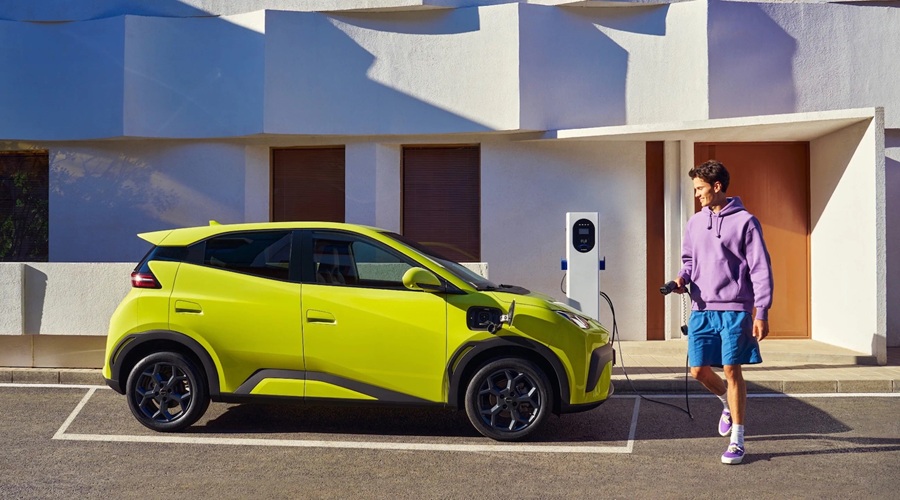
Chinese manufacturers are also increasingly relying on overseas markets. New energy vehicle exports rose more than 150% year over year to a record approximately 518,000 units in August, taking cumulative exports for the first eight months of 2026 above 3.3 million.
BYD remained China’s largest NEV exporter and raised its full-year overseas sales target for the second time this year, according to Benchmark.
Emerging Markets Continue Rapid Expansion
Markets outside China, Europe and North America recorded some of the fastest growth globally.
EV sales in the rest of the world reached approximately 290,000 in August, unchanged from July but up 97% from a year earlier. Sales in these markets totaled about 2 million units during the first eight months of 2026, also 97% above the same period last year.
The strong performance in Europe and these emerging markets offset declines in China and North America sufficiently to keep global EV sales growing in August.
Regional Policies Shape Global EV Demand
The August figures highlight increasingly divergent EV trends across major markets.
Europe’s growth has been supported by government incentives, greater availability of lower-priced models and market conditions that continue to favor electrified vehicles in several countries. North America, meanwhile, is dealing with the aftermath of the U.S. federal EV tax credit’s expiration and an unusually strong comparison period from 2025.
China remains the world’s largest EV market by volume, but its automakers are placing greater emphasis on exports as domestic sales weaken.
For the global EV industry, the August data point to continued expansion, but with growth increasingly concentrated in Europe and markets outside the three largest regions while North America contracts and China navigates a weaker annual comparison.