

By TVI Today Special Correspondent
VIENNA, Sept. 19, 2026: The International Atomic Energy Agency’s 70th General Conference concluded in Vienna on September 18 after five days of discussions that placed nuclear energy expansion, nonproliferation, nuclear safety, advanced reactors, fusion technology and international technical cooperation at the center of the global agenda.
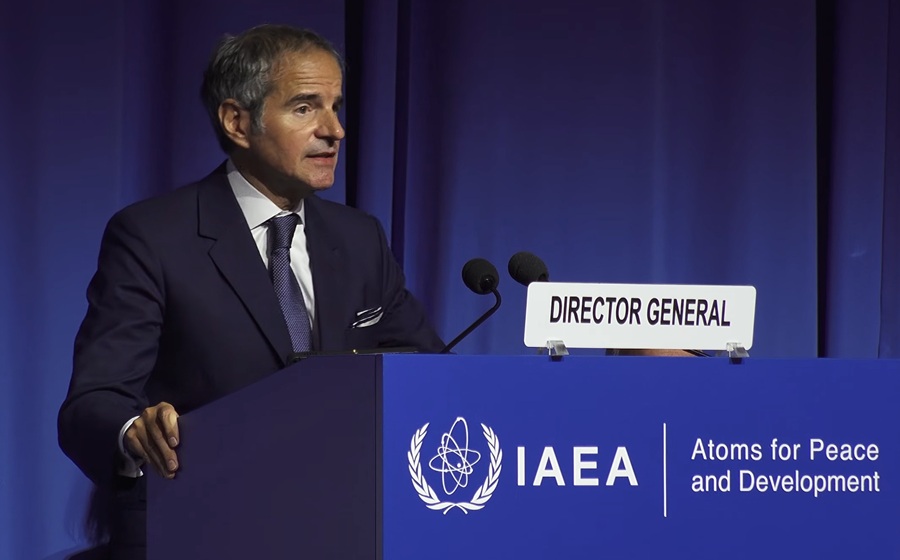
The 70th General Conference brought together representatives of the IAEA’s 182 Member States, with Director General Rafael Mariano Grossi using his opening statement on September 14 to highlight both the expanding role of nuclear technology and the growing pressures on the international nuclear order.
The meeting also produced a series of new institutional and technical cooperation arrangements involving individual countries, while Pakistan and China advanced separate nuclear cooperation initiatives with the IAEA.
The conference came against a backdrop of heightened security concerns surrounding Iran and Ukraine, renewed international interest in nuclear power, and growing attention to small modular reactors (SMRs), fusion energy and nuclear applications outside electricity generation.
IAEA Board Gets 11 New Members
On September 18, 11 countries were elected to the 35-member IAEA Board of Governors for the 2026-2028 period.
The newly elected members are Angola, Brazil, Greece, Honduras, Kuwait, Malaysia, Mexico, New Zealand, Nigeria, Slovakia and Sweden.
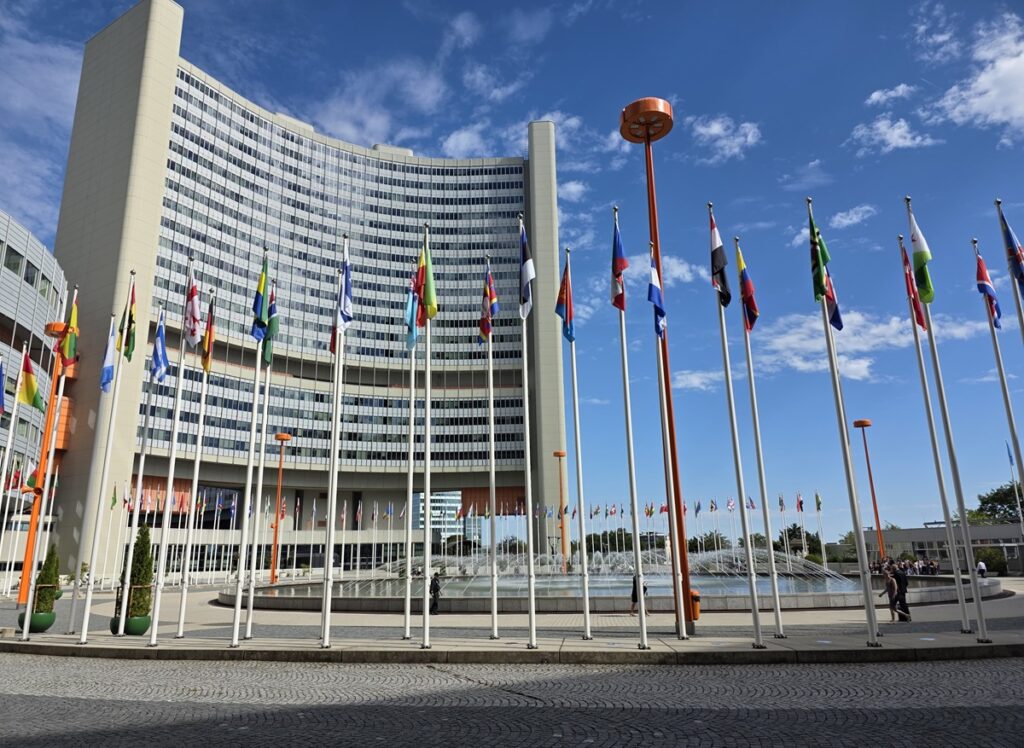
For the 2026-2027 period, the Board’s composition includes Angola, Argentina, Australia, Belgium, Brazil, Canada, Chile, China, France, Germany, Greece, Honduras, India, Italy, Japan, Jordan, Kuwait, Lithuania, Malaysia, Mexico, New Zealand, Niger, Nigeria, Peru, the Philippines, Portugal, Romania, the Russian Federation, Saudi Arabia, Slovakia, South Africa, Sweden, Togo, the United Kingdom of Great Britain and Northern Ireland, and the United States of America.
The Board of Governors is one of the IAEA’s two policy-making bodies, alongside the annual General Conference.
Nuclear Power Outlook Extends to 2060
One of the conference’s central messages was the IAEA’s increasingly positive outlook for nuclear power.
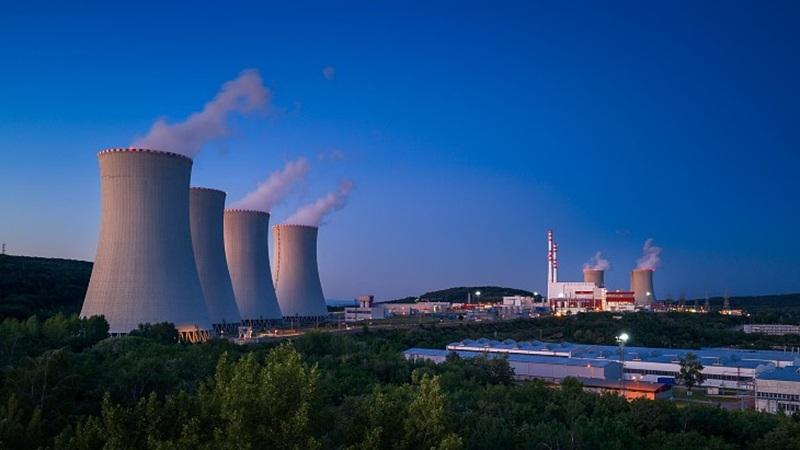
The agency’s latest edition of Energy, Electricity and Nuclear Power Estimates for the Period up to 2060 projects that global nuclear generating capacity could more than triple by 2060 under its high case scenario.
At the end of 2025, 413 nuclear power reactors were operating worldwide, providing 377.1 gigawatts electric (GW(e)) of capacity.
Under the IAEA’s high case projection, global capacity would reach 1,045 GW(e) by 2050 and 1,284 GW(e) by 2060, approximately 3.4 times the 2025 level. The low case projects 696 GW(e) by 2060, nearly double the 2025 level.
The latest projection represents the sixth consecutive year in which the IAEA has raised its forecast for nuclear power expansion.
“The IAEA projections show the increasing role of nuclear power in meeting the world’s growing electricity needs. To realize this potential, investment in new nuclear capacity and reactor lifetime extensions will be essential,” Grossi said.
Nuclear electricity generation increased 1.1% in 2025 to 2,689.1 terawatt-hours, but global electricity generation grew faster, by 2.7%. As a result, nuclear power’s share of global electricity generation declined from 8.7% in 2024 to 8.4% in 2025.
Central and Eastern Asia is expected to account for the largest share of future nuclear additions. In the IAEA’s high case, nuclear capacity in the region could rise from 114 GW(e) in 2025 to 407 GW(e) by 2060.
SMRs Become a Larger Part of Nuclear Expansion
Small modular reactors are expected to account for an increasing share of future nuclear construction.
The IAEA’s high case projects that 28% of all new nuclear capacity added by 2060 could come from SMRs, compared with 23% in the low case.
That represents a notable increase from the previous edition of the IAEA’s projections, in which SMRs accounted for 24% of new capacity in the high case and 5% in the low case.
North America is projected to have particularly strong SMR deployment, with about 60% of new nuclear capacity potentially coming from SMRs.
The IAEA also projects SMRs could account for about 40% of new nuclear capacity in both the high and low cases in South-Eastern Asia and Latin America and the Caribbean.
The expansion of nuclear power will also have to contend with an aging global reactor fleet. Two out of every three nuclear reactors have been operating for more than 30 years, while 45% have operated for more than 40 years.
In the high case, approximately one-third of the world’s 2025 nuclear capacity would retire by 2060. In the low case, almost two-thirds could retire.
In 2025, seven reactors with a combined capacity of 2.8 GW(e) were retired, while three reactors totaling 3.0 GW(e) were connected to the grid. Construction also began on 12 reactors expected to add 14.3 GW(e).
AI and Nuclear Energy Move Closer Together
Grossi also linked the expansion of nuclear power to the rapid growth of artificial intelligence and digital infrastructure.
He said the relationship between AI and nuclear energy is “no longer incidental or optional.”
The IAEA director general argued that data centers and digital infrastructure are creating demand for continuous, low-carbon and high-reliability electricity, characteristics that can support the case for nuclear power.
The IAEA now supports 43 countries seeking to develop nuclear power programs under its Milestones Approach, while another 20 countries are considering joining the process.
Financing remains a major issue, particularly for developing countries seeking to establish new nuclear programs.
Grossi pointed to the World Bank Group’s decision to lift its previous restriction on financing nuclear energy and its partnership with the IAEA as part of a wider expansion in access to financing.
He also highlighted efforts to support SMR regulation and standardization through the IAEA’s Nuclear Harmonization and Standardization Initiative.
Nuclear Power Moves Beyond the Grid
The IAEA is also expanding its work on nuclear applications outside conventional electricity generation.
In August, Grossi launched the Atomic Technologies Licensed for Applications at Sea, or ATLAS, initiative at a high-level event in the United States. The initiative is intended to address legal, policy, regulatory and technical questions surrounding the potential maritime use of nuclear technology.
The IAEA said the global shipping industry is exploring SMRs as a possible alternative to conventional marine fuels.
The agency is working with the International Maritime Organization on ATLAS, including issues related to safeguards and the potential use of nuclear technology to provide power to remote communities.
Grossi also highlighted the potential of advanced reactors to supply industrial heat, hydrogen and other forms of energy beyond electricity.
China Advances Fusion and HTGR Cooperation
China used the General Conference to showcase progress in fusion energy and advanced nuclear technology.
At a September 18 side event titled Fusion for the Future: Engineering the Key Pathway to Realising Fusion Energy, China outlined its objective of achieving commercial utilization of fusion energy by 2050 and emphasized international cooperation.
China Fusion Energy Co, part of China National Nuclear Corporation, signed cooperation agreements with the multinational ITER fusion project and China’s Southwestern Institute of Physics signed an agreement with the Thailand Institute of Nuclear Technology.
China also highlighted progress at the HL-3 tokamak, described as the country’s largest and highest-parameter tokamak.
According to the information presented at the event, HL-3 achieved ion temperatures of 120 million degrees Celsius and electron temperatures of 160 million degrees Celsius in 2025.
More than 80 international scientists have participated in cooperation involving HL-3 since it was opened to international collaboration in 2024, with more than 260 proposals received and more than 100 papers published.
The Southwestern Institute of Physics said it has cooperation agreements with 30 countries and that the Controllable Nuclear Fusion Innovation Consortium now has 60 members.
China’s presentation also highlighted planned facilities in Shanghai and Chengdu, upgrades to HL-3 and preparations for deuterium-tritium burning-plasma physics experiments in 2027.
The Chinese side argued that fusion development is moving beyond basic research toward engineering demonstration and pre-commercial stages, while identifying engineering bottlenecks, industrial cooperation and standards as remaining challenges.
China and IAEA Expand Cooperation on High-Temperature Reactors
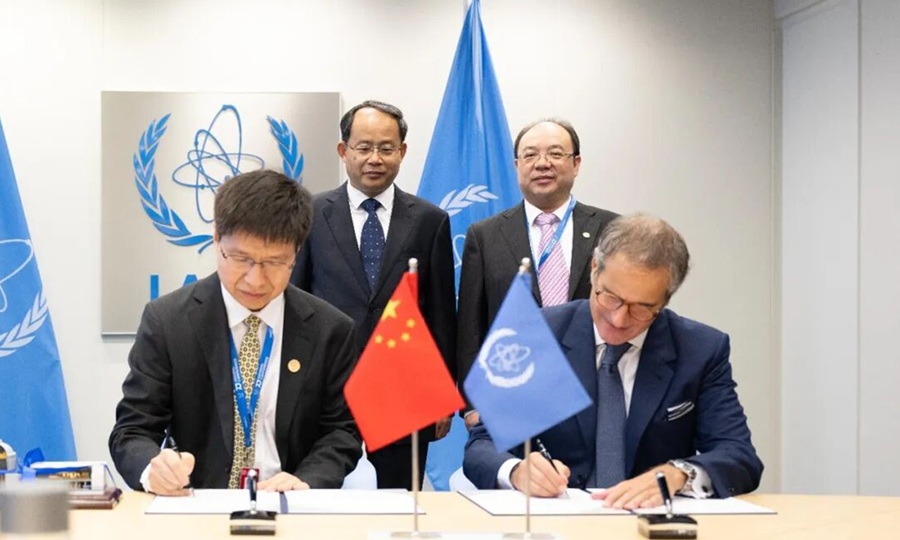
Separately, Chinergy Co Ltd, a subsidiary of China National Nuclear Corporation, and the IAEA signed a cooperation agreement covering high-temperature gas-cooled reactor (HGTR) technology.
The agreement provides for cooperation and information exchange on the research and development, design, construction, commissioning and operation of HTGR nuclear power plants, as well as supply chains and personnel training.
China has developed HTGR technology through projects including the HTR-PM demonstration plant at Shidao Bay. The technology can produce electricity while also providing high-temperature heat for industrial processes and potentially hydrogen production.
The agreement with the IAEA establishes a framework for technical cooperation and information exchange. It does not itself create a plan for deploying Chinese HTGR reactors in other countries.
Pakistan and IAEA Sign Chashma-5 Safeguards Agreement
On the sidelines of the summit, Pakistan signed a safeguards agreement with the IAEA during the conference.
On September 14, IAEA Director General Rafael Mariano Grossi and Pakistan Atomic Energy Commission Chairman Raja Ali Raza Anwar signed a safeguards agreement covering Unit-5 of the Chashma nuclear power complex.
The agreement covers the 1,200-megawatt Chashma-5 nuclear power plant and was unanimously approved by the IAEA Board of Governors in March.
China Atomic Energy Authority Chairman Shan Zhongde witnessed the signing.
Pakistan is currently operating six nuclear power plants with a combined installed capacity of 3,530 MW. Chashma-5 is scheduled for commissioning in 2028.
The agreement establishes the framework for applying IAEA safeguards to the new reactor and forms part of Pakistan’s existing safeguards arrangements for nuclear facilities supplied by China. The IAEA’s legal records list multiple safeguards agreements between Pakistan and the agency covering Chinese-supplied nuclear power stations.
Pakistani and Chinese delegations also held separate discussions on cooperation in the peaceful applications of nuclear science and technology during the conference.
Syria Signs New Technical Cooperation Framework
Syria signed a separate Country Programme Framework with the IAEA on September 16.
IAEA Deputy Director General and Head of the Department of Technical Cooperation Hua Liu and Dr. Mudar Al Okla, director general of the Atomic Energy Commission of Syria, signed the framework for 2026-2031.
The agreement identifies seven priority areas: nuclear and radiation safety, health and nutrition, food and agriculture, energy planning, nuclear knowledge management, industrial applications, and water and the environment.
The framework came as the IAEA reported progress in resolving outstanding safeguards questions concerning Syria’s past nuclear activities.
Grossi said the agency had received the necessary access and information from Syria and had evaluated safeguards-relevant information concerning the site at Deir Alzour.
He said the Agency had been able to “clarify and resolve its questions concerning the outstanding safeguards issues related to Syria’s past nuclear activities.”
Grossi attributed the progress to Syria’s transparency and cooperation as well as the work of the IAEA.
Bahamas Signs First Country Programme Framework
The Commonwealth of The Bahamas signed its first IAEA Country Programme Framework on September 15.
H.E. Ron O. Pinder, Ambassador-at-Large for Environmental and Educational Matters, presented and signed the 2026-2031 framework with Hua Liu.
The framework identifies five priority areas: nuclear and radiation safety and nuclear security; food and agriculture; human health and nutrition; water and environment; and energy and industry.
The Bahamas has been an IAEA Member State since 2014.
Cabo Verde Signs First IAEA Country Programme Framework
The Republic of Cabo Verde signed its first Country Programme Framework on September 16. Hua Liu and H.E. Clara Manuela da Luz Delgado Jesus, resident representative of the Permanent Mission of Cabo Verde to the IAEA, signed the framework covering 2026-2031.
The four priority areas are nuclear and radiation safety and nuclear security, food and agriculture, human health, and water resources management. Cabo Verde joined the IAEA in 2023.
Mexico Signs 2026-2031 Framework
Mexico signed a separate Country Programme Framework on September 14. Dr. Laila Porras Musalem, director general of International Affairs at Mexico’s Secretariat of Energy, and Hua Liu signed the 2026-2031 framework.
Mexico’s five priority areas are nuclear and radiation safety, food and agriculture, human health, water and the environment, and energy and industry. Mexico has been an IAEA Member State since 1958.
Tunisia Sets Seven Technical Cooperation Priorities
Tunisia signed its Country Programme Framework on September 17. Hua Liu and Mondher Belaid, Tunisia’s minister of higher education and scientific research, signed the framework covering 2026-2030.
The agreement identifies seven priority areas: nuclear and radiation safety and nuclear security; health and nutrition; food and agriculture; water and the environment; industrial applications and radiation technology; energy planning and nuclear power; and nuclear knowledge development and management. Tunisia has been an IAEA Member State since 1957.
Brunei Darussalam Signs Second Framework
Brunei Darussalam signed its second Country Programme Framework on September 18. Hajah Farida Dato Seri Paduka Hajib Talib, permanent secretary of Energy, and Hua Liu signed the framework covering 2025-2031. The three priority areas are nuclear radiation safety and nuclear security, food and agriculture, and health and nutrition. Brunei Darussalam has been an IAEA Member State since 2014.
UK and Cook Islands Strengthen Nuclear Legal Commitments
The conference also hosted a Treaty Event on September 16 involving the United Kingdom and the Cook Islands. The United Kingdom deposited its instrument of ratification of the Amendment to the Convention on Supplementary Compensation for Nuclear Damage.
The amendment, adopted in 2026, removes the requirement for states without nuclear reactors to contribute to the convention’s supplementary international fund by revising the contribution formula.
The Cook Islands separately deposited its instrument of acceptance of the Regional Cooperative Agreement for Research, Development and Training Related to Nuclear Science and Technology for Asia and the Pacific.
Grossi said: “By joining such treaties, a State not only commits to important national responsibilities, it also signals to the international community its dedication to a strong legal framework aimed at ensuring the safe, secure and peaceful use of nuclear technology,”
Iran Remains a Major Safeguards Concern
The IAEA’s oversight of Iran’s nuclear program remained one of the most consequential security issues discussed during the conference.
Grossi said renewed attacks on Iran at the end of February had forced the agency to withdraw its inspectors. Apart from an inspection at the Bushehr nuclear power plant in June, the IAEA had not conducted in-field verification activities in Iran for more than six months.
He also said it had been more than a year since the agency had maintained continuity of knowledge concerning previously declared inventories of low-enriched uranium and uranium enriched up to 60% U-235 at declared nuclear facilities affected by the June 2025 attacks.
“The Agency’s lack of information about this nuclear material and access to facilities to verify it is a matter of serious proliferation concern and needs to be addressed with the utmost urgency,” Grossi said.
“A return to diplomacy and negotiations aimed at finding a solution to issues related to Iran’s nuclear programme is imperative, and the Agency stands ready to support such efforts. The situation regarding Iran’s nuclear programme has implications for the global non-proliferation regime.”
Grossi also urged IAEA Member States to reaffirm their commitment to the Treaty on the Non-Proliferation of Nuclear Weapons.
Iran’s nuclear chief Mohammad Eslami was unable to attend the conference after Austria’s request for a UN Security Council sanctions exemption to allow him to travel to Vienna was rejected for lack of consensus, following a US objection. Iran’s IAEA ambassador, Reza Najafi, told delegates that denying Eslami access violated Iran’s rights as an IAEA member. Austria said the sanctions committee’s decision left it legally obliged to prevent Eslami from entering the country.
Syria Safeguards Questions Resolved
The situation in Syria offered a contrasting development. Grossi said the IAEA had received access and information needed to evaluate outstanding safeguards questions connected to Syria’s past nuclear activities.
The agency had previously assessed that a building destroyed at Deir Alzour in 2007 was very likely a nuclear reactor under construction that Syria was required to declare under its NPT Safeguards Agreement.
Grossi said the agency had now been able to resolve its questions concerning the outstanding safeguards issues.
The development followed his visit to the site in August and subsequent cooperation with Syrian authorities.
Ukraine Nuclear Safety Remains Fragile
Ukraine remained another major focus of the IAEA’s nuclear safety work.
IAEA teams continue to be stationed at Ukraine’s nuclear power plants, including the Zaporizhzhya Nuclear Power Plant, which remains on the front line of the conflict.
Grossi said Zaporizhzhya had experienced 10 losses of off-site power since June and 26 since the conflict began in 2022.
He also said the plant’s emergency diesel generators had depleted almost all of their fuel supplies.
The IAEA helped negotiate a seventh temporary ceasefire that enabled demining and repairs to the Ferosplavna-1 power line, restoring an external electricity supply needed to support cooling systems at the plant.
Since the IAEA’s first mission to Ukraine in 2022, 185 agency staff members have participated in 287 missions, while more than 250 equipment deliveries worth approximately €27 million have supported radiation monitoring, physical protection, emergency preparedness and nuclear safety and security functions.
Fukushima Monitoring Continues
The IAEA also reported that all 23 batches of ALPS-treated water released so far from the Fukushima Daiichi Nuclear Power Station had been below operational limits and in line with international safety standards, according to its monitoring program.
An additional monitoring mission conducted in September involved international experts from China, the Republic of Korea and Switzerland.
The agency said the monitoring work is intended to provide scientific data and support transparency surrounding the releases.
Rays of Hope Expands Global Cancer Cooperation
Cancer care was another major component of the General Conference through the IAEA’s Rays of Hope initiative.
The Scientific Forum brought together approximately 380 participants, including ministers, cancer specialists, development partners and industry representatives.
The IAEA said cancer causes more than 10 million deaths annually worldwide and that the figure is expected to double by 2050.
Access to radiotherapy and other cancer technologies remains sharply unequal. According to IAEA data, one radiotherapy machine serves an average of about 140,000 people in high-income countries, compared with more than 15 million people in low-income countries.
More than 100 countries have joined Rays of Hope since its launch in 2022. The initiative has mobilized more than €100 million and supported the opening, expansion or construction of more than 20 cancer centers, procurement of more than 150 diagnostic and treatment technologies, and training for more than 800 medical professionals.
Grossi said: “We are not talking here about things that are unattainable, that we cannot achieve, that demand investments in the billions,” adding “It’s not impossible. Let’s do it together.”
The IAEA also announced Singapore’s SingHealth as a new Rays of Hope Anchor Centre, joining a network of major healthcare institutions supporting regional cancer-care capacity.
The agency signed additional Rays of Hope partnership agreements with the Principality of Monaco and private-sector organizations including AMEX Healthcare, Elekta, GE Healthcare, HTA Co., Ltd., RaySearch Laboratories AB, Siemens Healthineers and Vertual.
Nuclear Technology Expands into Food, Water and Health
Grossi’s opening statement also highlighted nuclear applications beyond power generation.
The IAEA/FAO Atoms4Food initiative now includes 46 countries and uses nuclear science to support food security and safety.
The agency is also applying the Sterile Insect Technique against pests including the New World Screwworm, while radiation-based technologies are being used in crop development.
The IAEA’s GloWAL Network now connects 71 laboratories from 63 countries to improve scientific understanding and management of water resources.
Its Zoonotic Disease Integrated Action initiative has continued providing equipment, reagents and personal protective equipment during animal and zoonotic disease emergencies.
The agency also reported progress under NUTEC Plastics. Its Global Marine Plastics Monitoring Network and Common Database were launched in July, bringing together 180 institutions from 110 Member States.
Women and the Nuclear Workforce
The IAEA also highlighted workforce development and efforts to increase women’s participation in the nuclear sector.
Since its launch six years ago, the Marie Sklodowska-Curie Fellowship Programme has selected 860 women from 135 Member States for support toward master’s degrees in nuclear-related fields and internships.
The Lise Meitner Programme, launched in 2023, has brought together 115 women professionals from 49 countries through eight visits hosted by seven Member States.
Grossi said the nuclear sector would need to draw on wider pools of talent as experienced workers retire.
Broader Nuclear Cooperation Agenda
The conference demonstrated the breadth of the IAEA’s current agenda, stretching from safeguards and nuclear security to new reactors, fusion energy, cancer treatment, food security, water management and environmental monitoring.
In his opening statement, Grossi acknowledged the strains facing the international system while arguing that nuclear cooperation remains possible across political divisions.
“Does the world suffer from tension and fracture? Yes. Has our work become more difficult in places? Yes. Are there trends undermining nuclear non-proliferation? Yes.”
He added: “But as serious as these challenges are, they should not prevent us from recognising the progress being made in the patient labour of peace, security and development.”
The conference’s nuclear energy discussions also reflected a shift in the IAEA’s outlook from projections toward implementation. Countries are not only considering nuclear power as an energy-security option but are exploring SMRs, industrial heat, hydrogen, maritime applications and advanced reactor technologies.
Fusion remains longer-term, but China and other participants used the conference to emphasize the move toward engineering and commercialization.
For the IAEA, the coming period will require progress on several fronts simultaneously: maintaining effective safeguards, protecting nuclear facilities in conflict zones, managing an aging reactor fleet, financing new nuclear construction, developing common approaches for SMRs, advancing fusion engineering and expanding access to nuclear applications in health, agriculture and environmental protection.
Grossi summarized the agency’s approach in his opening statement: “This is what we are achieving through a common spirit of dedication.”
The 70th General Conference therefore closed with nuclear technology positioned not only as a question of energy policy, but as an increasingly broad component of international security, development and scientific cooperation.