

The first direct, high-level negotiations between the United States and Iran since the outbreak of the regional war are underway in Islamabad, Pakistan, amid what officials describe as a “make-or-break” moment for Middle East stability.
Delegations led by U.S. Vice President JD Vance and Iranian Parliament Speaker Mohammad Bagher Ghalibaf convened following a fragile two-week ceasefire that has temporarily halted a conflict responsible for thousands of deaths and severe disruptions to global energy markets.
Both the sides were greeted by Pakistan’s Foreign Minister Ishaq Dar and Pakistan’s military chief Asim Munir, had played an important role in bringing the two sides to the negotiating table.
A U.S. government aircraft carrying senior officials landed in Islamabad on April 11, marking the formal start of negotiations aimed at de-escalating a war that has “severely impacted energy supplies” and “slowed the global economy.”
Islamabad Talks 2026
Islamabad has been transformed into a high-security “Red Zone.” The government declared a two-day local holiday to facilitate the movement of the delegations, and the Serena Hotel has been cleared of all private guests. Billboards featuring the flags of the US, Iran, and Pakistan have appeared across the city—a visual testament to the rare diplomatic alignment occurring within its borders.
The negotiations, hosted at the heavily fortified Serena Hotel, follow a fragile two-week ceasefire mediated by Pakistan. The diplomatic atmosphere in Islamabad is one of cautious optimism, shadowed by decades of profound mistrust.
The talks come as the broader region remains volatile, with continued Israeli strikes in Lebanon and persistent uncertainty over the durability of the ceasefire. Tehran has signaled deep mistrust, while Washington has warned against any negotiating in bad faith.
US and Iranian envoys meet Pakistani PM ahead of talks
Pakistan’s Prime Minister Shehbaz Sharif held separate high-stakes meetings with the Iranian delegation, led by Speaker Mohammad Bagher Ghalibaf, and the U.S. delegation, headed by Vice President JD Vance, to finalize the framework for the Islamabad Talks.
During these sessions, Sharif commended both sides for their commitment to dialogue, emphasizing that Pakistan remains dedicated to facilitating a “stepping stone toward durable peace” in the region.
Key Talking Points in US-Iran Talks
Senior U.S. and Iranian officials meeting in Islamabad are focusing on several core disputes shaping the negotiations:
- Lebanon Ceasefire: Iran demands a U.S. commitment to a ceasefire in Lebanon, while Washington and Israel insist that front is separate from U.S.–Iran talks.
- Sanctions Relief: Tehran seeks the lifting of sanctions and access to frozen assets; the U.S. signals openness only in exchange for limits on Iran’s nuclear and missile programs.
- Strait of Hormuz: Iran wants recognition of its authority, including potential transit fees; the U.S. insists on unrestricted maritime access.
- War Compensation: Iran is expected to demand compensation for damages from the conflict; the U.S. position remains unclear.
- Nuclear Program: Iran wants to continue uranium enrichment; the U.S. has ruled this out as non-negotiable.
- Missile Capabilities: The U.S. and Israel seek major reductions; Iran considers its missile arsenal non-negotiable.
- Regional Military Presence: Iran calls for U.S. troop withdrawal and non-aggression commitments; Washington intends to maintain its regional military presence.
Return to Direct Diplomacy
The United States delegation is led by Vice President JD Vance, marking the highest-level direct engagement with Iranian officials in decades. Accompanying the Vice President are Steve Witkoff, President Donald Trump’s special envoy to the Middle East, and Trump’s son-in-law Jared Kushner.
Before departing from Joint Base Andrews on Friday, Vice President Vance set a firm tone for the proceedings. “As the president of the United States said, if the Iranians are willing to negotiate in good faith, we’re certainly willing to extend the open hand,” Vance told reporters. However, he added a sharp warning: “Don’t play us.”
The Iranian delegation is headed by Parliament Speaker Mohammad Bagher Ghalibaf and Foreign Minister Abbas Araghchi. Upon his arrival at Nur Khan Air Base, Ghalibaf expressed the deep-seated skepticism prevalent in Tehran. Ghalibaf issued an ultimatum, demanding a ceasefire in Lebanon and the release of blocked Iranian assets as mandatory preconditions for formal negotiations.
Officials from the region said that Egyptian, Saudi, Chinese and Qatari officials are also in Islamabad to indirectly facilitate the talks.
Pakistan’s Mediation highlights key role in global politics
Pakistan has emerged as a central diplomatic broker, having facilitated the initial ceasefire and hosted the current negotiations under tight security in Islamabad’s diplomatic enclave.
Prime Minister Shehbaz Sharif extended the invitation to both sides and has framed the talks as critical to preventing further regional escalation. The negotiations are being conducted at undisclosed high-security venues, reflecting both the sensitivity and geopolitical stakes involved.
Pakistani mediation has also been shaped by competing regional pressures, including its strategic ties with Gulf states and concerns over spillover effects from continued hostilities. Analysts note that Islamabad’s role as an intermediary underscores its longstanding function as a backchannel between adversarial powers.
Iranian delegation in Islamabad for US-Iran Talks
Iranʼs delegation that arrived in Islamabad hours before the American delegation. The delegation of at least 70 people comprises veteran diplomats and negotiators, political, economic and security officials, central bank governor, experts in finance and sanctions, military officials and legal advisers.
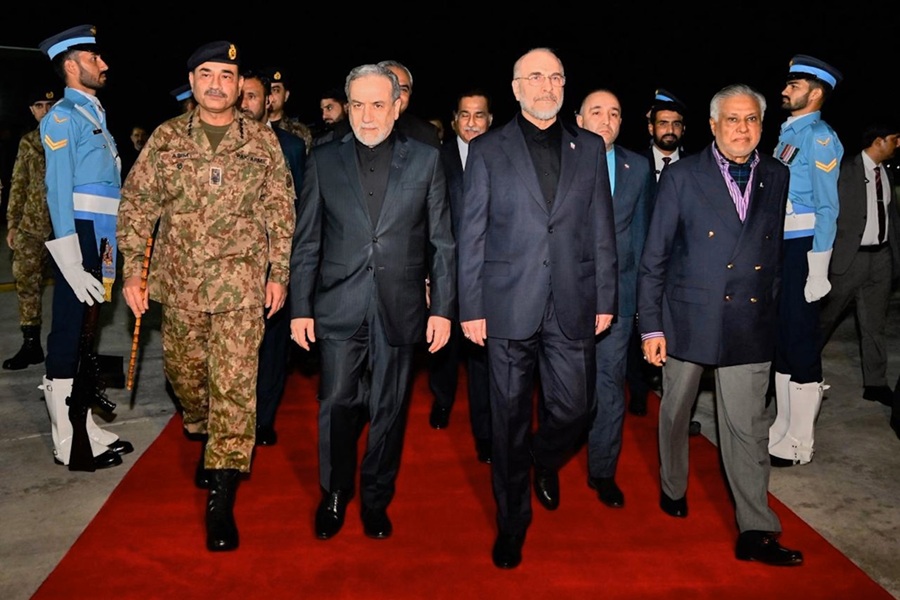
Here’s the full list of members of the Iranian delegation.
- Mohammad Bagher Ghalibaf, the head of the delegation and the Iranian parliamentary speaker;
- Seyed Abbas Araghchi, the foreign minister;
- Reza Amiri Moghadam, the ambassador to Pakistan;
- Ali Akbar Ahmadian, a member of the Supreme National Security Council of Iran;
- Ali Bagheri Kani, the deputy to the Supreme National Security Council and former acting foreign minister;
- Esmael Ahmadi Moghadam, the president of the National Defense university;
- Mohammad Jafari, the assistant to the secretary of the Supreme National Security Council;
- Naser Hemati, the governor of Iran’s central bank;
- Kazim Gharibabadi, a deputy foreign minister;
- Majid Takht e Ravanchi, a deputy foreign minister;
- Valiollah Nouri, a deputy foreign minister;
- Esmail Baghaei, a deputy foreign minister and spokesperson for the Iranian ministry of foreign affairs;
- Abolfazl Amouei, an Iranian MP;
- and Mohammad Nabavian, an Iranian MP.
Competing Frameworks: 15-Point Plan vs. 10-Point
Iranian Proposal At the core of the Islamabad talks are two competing frameworks: a 15-point U.S. proposal and a 10-point Iranian counter-proposal. While full details of the U.S. plan have not been publicly disclosed, it is understood to prioritize reopening the Strait of Hormuz, halting Iran’s nuclear enrichment activities, and establishing verifiable security guarantees.
Iran’s 10-point proposal, by contrast, emphasizes sovereignty and economic relief. According to Iranian officials, the plan calls for the lifting of all sanctions, compensation for wartime damages, and Iranian oversight of the Strait of Hormuz, described as providing a “unique economic and geopolitical position.”
Tehran has also insisted on preconditions for negotiations, including an end to U.S. military strikes and guarantees against future attacks. These divergent frameworks highlight the fundamental gap between the two sides: Washington’s focus on security and non-proliferation versus Tehran’s emphasis on economic sovereignty and regional influence.
US 15-Point Plan: Reportedly demands extensive curbs on Iran’s nuclear program, a total halt to ballistic missile development, and the cessation of support for regional proxies.
Iranian 10-Point Plan: Focuses on the immediate removal of all U.S. sanctions, the recognition of enrichment rights, and the withdrawal of American forces from the region.
Strait of Hormuz and Global Economic Security
For the international community, the most pressing issue remains the Strait of Hormuz. The blockage of this vital waterway has led to a “systemic jet fuel shortage” in Europe, with Airports Council International-Europe warning of economic harm within weeks if the status quo persists.
President Trump has maintained a characteristically blunt stance on the maritime issue. On April 1, he stated that the US would consider a ceasefire once the Strait of Hormuz was “open, free, and clear,” warning of continued military pressure until that condition is met. The Iranian Revolutionary Guard Corps (IRGC) has responded with equal defiance, calling the President’s demands a “ridiculous spectacle.”
Lebanon, Sanctions and Regional Linkages
Beyond the Strait of Hormuz, the negotiations are complicated by interconnected regional conflicts, particularly in Lebanon. Iran has demanded a U.S. commitment to a ceasefire in Lebanon as a prerequisite for broader negotiations.
Tehran is also pressing for the release of frozen assets and the lifting of economic sanctions, issues that remain politically sensitive in Washington.
These demands reflect Iran’s strategy of linking the bilateral negotiations to wider regional dynamics, thereby increasing leverage but also complicating the path to an agreement.