

The high-stakes, 21-hour diplomatic marathon between the United States and Iran concluded Sunday without a breakthrough, casting the future of a fragile regional ceasefire into immediate uncertainty.
US Vice President JD Vance announced the conclusion of the talks from the Pakistani capital, confirming that the Iranian delegation rejected what he characterized as Washington’s “final and best offer.”
The failure to reach a permanent settlement leaves critical issues unresolved, including the status of the Strait of Hormuz and the long-term trajectory of Tehran’s nuclear program.
US Vice President JD Vance confirmed early Sunday that discussions had failed to produce a breakthrough. “We’ve had a number of substantive discussions with the Iranians. That’s the good news. The bad news is we have not reached an agreement,” Vance said at a press conference in Islamabad.
As the delegations departed, the regional security environment remained volatile, punctuated by continued Israeli strikes in southern Lebanon and a deepening humanitarian crisis.
Core Disputes derail Negotiations
The talks, which began Saturday and extended into Sunday morning, were aimed at securing a permanent end to hostilities and stabilizing the region. Despite what Washington described as a flexible negotiating position, fundamental disagreements remained unresolved.
“I think that’s bad news for Iran much more than it’s bad news for the United States of America. So we go back to the United States having not come to an agreement,” Vance said.
According to US officials, Iran declined to accept what Vance described as Washington’s “final and best offer.”
“We were quite accommodating. The president told us, ‘You need to come here in good faith and make your best effort to get a deal.’ We did that, and unfortunately, we weren’t able to make make any headway,” he said.

A central sticking point was Iran’s refusal to commit to abandoning its nuclear ambitions. “The question is, ‘Do we see a fundamental commitment of will for the Iranians not to develop a nuclear weapon not just now, not just two years from now but for the long term?’ We haven’t seen that yet, we hope we will,” Vance said.
Iranian officials, however, attributed the breakdown to US demands. A correspondent for the semi-official Tasnim news agency reported: “The negotiations between the Iranian and American teams concluded a few minutes ago and, due to what is described as US overreach and ambitions, the two sides have so far failed to reach an agreement.”
Strait of Hormuz and Sanctions among key sticking points
Central to the collapse were three primary sticking points: the disposal of Iran’s enriched uranium, the reopening of the Strait of Hormuz, and the release of frozen Iranian revenues.
The U.S. delegation, which included senior White House special envoy Steve Witkoff and Jared Kushner, demanded that Iran relinquish its entire stockpile of nearly 900 pounds of highly enriched, near-bomb-grade uranium. Vance expressed concern over the lack of a “fundamental commitment of will” from Tehran to forgo nuclear weapons development in the long term.
Concurrently, Iran conditioned the reopening of the Strait of Hormuz – a vital artery for global energy supplies – on the finalization of a comprehensive peace deal. Iranian officials also sought the release of approximately $27 billion in frozen oil revenues held in accounts across Iraq, Europe, and Asia to fund reconstruction following weeks of intensive airstrikes. The U.S. reportedly refused these requests, further cementing the deadlock.
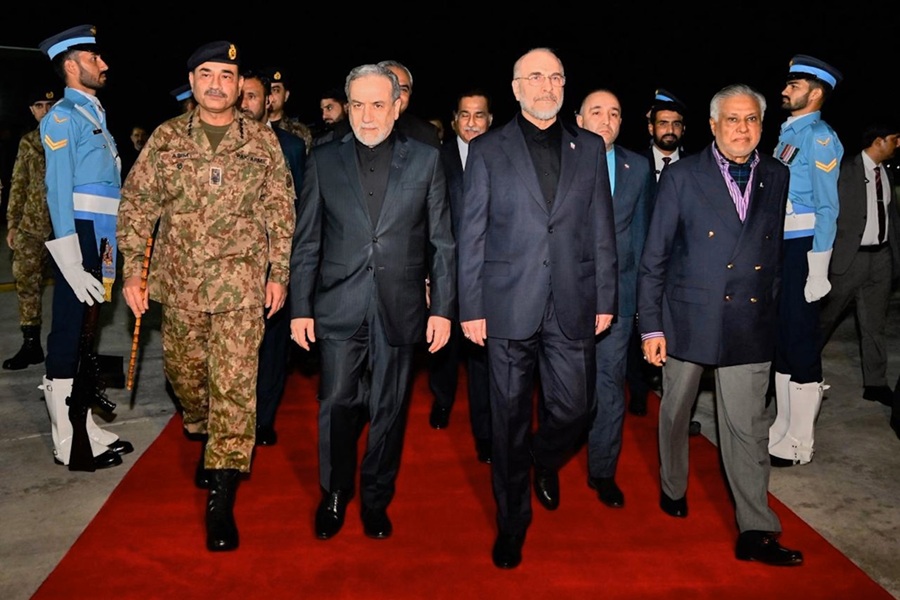
Additional friction emerged over regional security, including Washington’s unwillingness to commit to halting Israeli military operations in Lebanon, a key demand from Tehran.
Pakistan positions itself as ongoing Mediator
Pakistan, which hosted and facilitated the talks, signaled it would continue diplomatic efforts despite the setback.
Foreign Minister Ishaq Dar said, “Pakistan has been and will continue to play its role to facilitate engagement and dialogue between the Islamic Republic of Iran and the United States of America in the days to come.”
Dar said he and army chief Asim Munir helped mediate several rounds of “intense and constructive negotiations between the two sides.” He also and thanked both sides for participating.
Tehran expects talks to continue later
Iran’s Ministry of Foreign Affairs said on Sunday that no one had expected the talks with the US to reach an agreement in a single session.
“Naturally, from the beginning, we should not have expected to reach an agreement in a single session. No one had such an expectation,” ministry spokesperson Esmaeil Baghaei said, according to state broadcaster IRIB.
📹 سخنگوی وزارت خارجه: در مورد یکسری از موضوعات به تفاهم رسیدیم اما در مورد ۲-۳ موضوع مهم دیدگاهها فاصله داشت و نهایتاً گفتوگوها منجر به توافق نشد
— خبرگزاری تسنیم (@Tasnimnews_Fa) April 12, 2026
دیپلماسی هیچ وقت تمام نمیشود pic.twitter.com/OI5OXbHlgR
He said Tehran was “confident that contacts between us and Pakistan, as well as our other friends in the region, will continue”.
Israel strikes Lebanon as ceasefire hangs in the balance
The collapse of talks coincided with continued violence in the region. Israeli strikes in southern Lebanon persisted overnight, with state media reporting casualties after one attack hit a residential building.
The broader ceasefire, already strained by disagreements over its scope, now faces renewed uncertainty. Iran has accused Israel of violating the truce, while the United States has urged restraint.
The failure to secure an agreement also raises questions about maritime security. With limited traffic passing through the Strait of Hormuz and competing claims over mine-clearing operations, the risk to global energy supply chains remains acute.
The human cost of the conflict remains staggering. Data from the Human Rights Activists News Agency indicates at least 1,701 civilians have been killed in Iran, while Lebanon’s health ministry reports over 2,020 fatalities in the latest fighting between Israel and Hezbollah.
Uncertain Path Forward for Diplomacy
While Iranian state media suggested Tehran currently has “no plan for a next round of negotiations,” officials stopped short of ruling out future engagement. A foreign ministry spokesperson stated that “diplomacy never comes to an end,” signaling potential openness to renewed talks under different conditions.
Vance indicated that direct discussions had concluded for now, with no immediate plans for further sessions. He noted ongoing communication with senior US officials, including Donald Trump, during the negotiations.
“We’ve made it very clear what our red lines are, what things we’re willing to accommodate them on, and what things we’re not willing to accommodate them on, and they have chosen not to accept our terms,” Vance said.
Despite the lack of a deal, the talks marked a rare moment of direct engagement between senior US and Iranian officials. The meeting between Vance and Iranian parliamentary speaker Mohammad Bagher Ghalibaf represented the highest-level face-to-face contact between the two countries in decades.
Analysts noted that the duration and seriousness of the discussions reflected a shared interest in preventing further escalation, even as core disagreements proved insurmountable.
With both delegations returning home and positions unchanged, attention now turns to Washington and Tehran’s next moves—and whether diplomacy can regain momentum before the conflict intensifies further.
he collapse puts the spotlight back on the White House. President Trump, who remained in constant contact with Vance throughout the weekend, recently suggested that the outcome of the talks was secondary to the military gains already achieved. Nevertheless, without a formal agreement to secure the Strait of Hormuz and verify Iran’s nuclear concessions, the risk of a return to full-scale hostilities remains a primary concern for the international community.