

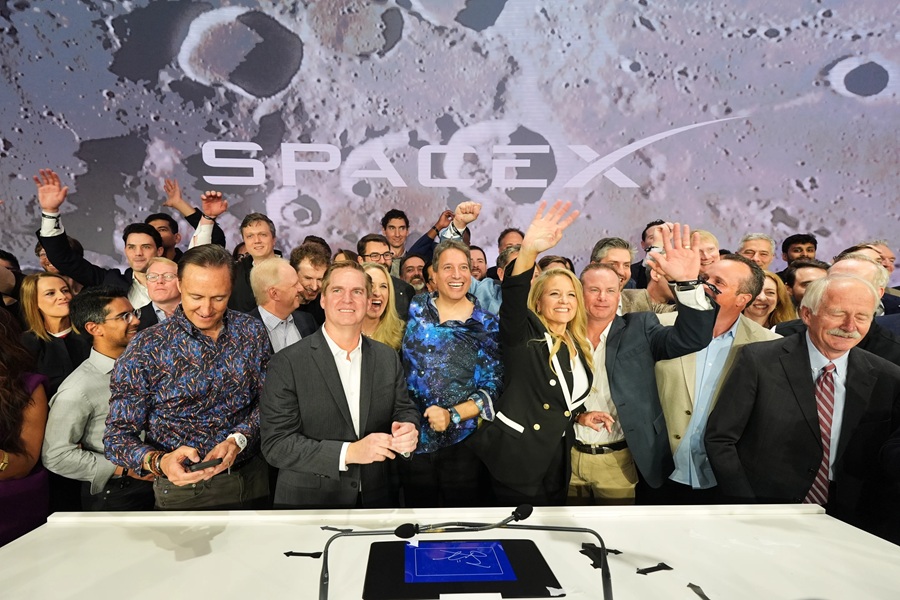
Elon Musk has become the first person in history to surpass a net worth of $1 trillion, following the public market debut of SpaceX on the Nasdaq.
SpaceX opened trading June 12, 2026, at $150 per share and later climbed roughly 20% to close just above $160, valuing the aerospace and satellite company at more than $2 trillion. The listing added more than $180 billion to Musk’s personal fortune, cementing a milestone that has long been viewed as unattainable even among the world’s wealthiest individuals.
According to estimates published by Forbes, Musk’s stake in SpaceX is worth more than $766 billion, while his holdings in Tesla are valued at approximately $280 billion. Together, those assets place his fortune at roughly $1.05 trillion. Forbes separately estimated his wealth at approximately $1.1 trillion following the IPO.
The SpaceX chairman, chief executive officer, and chief technical officer reportedly owns 4.8 billion SpaceX shares worth approximately $715 billion, along with 350 million stock options valued at around $50 billion, giving him a 38% stake in the company.
The historic milestone places Musk far ahead of every other individual on global wealth rankings. His personal fortune now exceeds the combined wealth of several of the world’s richest billionaires and is larger than the annual economic output of countries including Taiwan, Ireland, and Sweden.
From Billionaire to Trillionaire in Little More Than a Decade
Musk first appeared on Forbes’ World’s Billionaires List in 2012 with an estimated fortune of approximately $2 billion, ranking as the world’s 634th-richest person.
His wealth climbed steadily through the growth of Tesla before accelerating dramatically during the electric vehicle maker’s stock surge beginning in 2020. By January 2021, Musk had overtaken Amazon founder Jeff Bezos to become the world’s richest person.
Since then, his fortune has expanded at a pace unmatched by previous holders of the world’s richest-person title, including Bezos, Microsoft co-founder Bill Gates, and LVMH chairman Bernard Arnault.
As of Friday, Google co-founder Larry Page ranked a distant second among the world’s wealthiest individuals, with an estimated fortune approaching $300 billion. He was followed by fellow Google co-founder Sergey Brin, Amazon founder Jeff Bezos, and Oracle founder Larry Ellison.
Forbes noted that Gates’ wealth would have been substantially higher had he not donated large portions of his fortune to philanthropy.
Investor Confidence Drives SpaceX Valuation
The SpaceX initial public offering raised a record $75 billion, underscoring investor confidence in Musk’s business ventures despite ongoing debates about valuation and governance.
Much of Musk’s wealth is now tied to SpaceX, whose businesses span launch services, satellite communications, artificial intelligence, and long-term ambitions in space exploration.
The company’s valuation reflects investor expectations that Musk can replicate the disruptive impact he achieved in the automotive sector through Tesla.
“Much like Tesla, SpaceX is a bet on Elon Musk,” said Matt Kennedy, senior strategist at Renaissance Capital. “A market cap of $1.5 trillion-$2 trillion would certainly throw all traditional valuation methodologies out the window, and is instead best characterized as the ‘Elon Musk premium.'”
The concept of an “Elon premium” has become a common theme among investors who view Musk’s personal brand and track record as major drivers of valuation across his companies.
A Polarizing Figure at the Center of Global Business
Few corporate leaders have exerted as much influence across technology, transportation, communications, and public discourse as Musk.
After building Tesla into the world’s most valuable automaker and establishing SpaceX as a dominant force in commercial spaceflight, Musk expanded his public profile through the acquisition of Twitter in 2022. The purchase provided him with a direct platform to engage hundreds of millions of users on issues ranging from politics and immigration to government spending and free speech.
His growing involvement in political affairs has generated both support and criticism. Supporters praise his willingness to challenge established institutions, while critics argue that his influence increasingly resembles that of a modern oligarch and raises concerns about corporate governance and political power.
Musk’s relationship with U.S. President Donald Trump has attracted particular scrutiny. After supporting Trump’s return to the White House and serving in an advisory role through the Department of Government Efficiency initiative, Musk later publicly disagreed with the administration on several policy issues before relations improved.
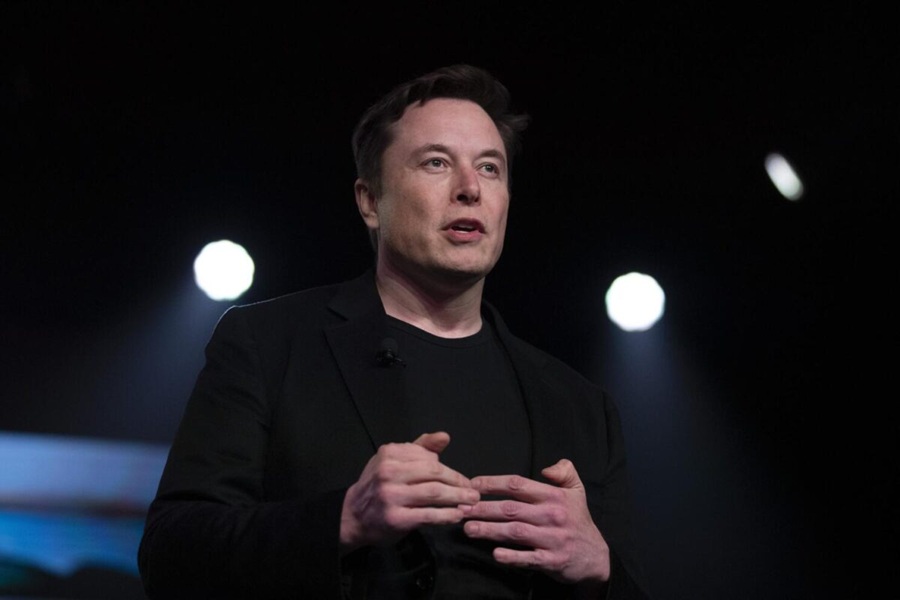
Despite recurring controversies, many investors remain focused on Musk’s history of transforming ambitious technological concepts into highly valuable businesses.
“He renewed the world’s respect for American ingenuity in automotive engineering,” said Bob Lutz, former vice chairman of General Motors.
JPMorgan Chase CEO Jamie Dimon offered similar praise, stating: “Elon is the Edison of our time.”
Dimon, who previously clashed with Musk in court, later described him as “our Einstein.”
Wealth Concentration Rekindles Debate Over Inequality
Musk’s emergence as the world’s first trillionaire is expected to intensify global discussions about wealth concentration and economic inequality.
The milestone arrives at a time when concerns over the widening gap between the ultra-wealthy and ordinary households have become increasingly prominent across advanced and emerging economies.
For many observers, the creation of a trillionaire underscores the extraordinary wealth-generating power of technology companies and capital markets. For critics, it highlights the growing concentration of economic influence among a small number of entrepreneurs and investors.
“The second richest person has been hovering around $300 billion, so about less than one-third of what Musk can potentially be worth tomorrow,” said Matt Durot, deputy editor at Forbes Wealth. “And only one other person, (Oracle founder) Larry Ellison, has ever been worth $400 billion.”
Durot added: “Elon Musk’s ascent to a $1 trillion fortune represents a milestone once considered unimaginable, highlighting how rapidly wealth can be created in an increasingly interconnected and technology-driven world.”
He continued: “Forbes remains the definitive source for understanding who is creating wealth, how they are creating it, and what it means for the future of business, and today marks a new chapter in the evolution of global business and entrepreneurship.”
Randall Lane, Chief Content Officer at Forbes, also emphasized the publication’s role in tracking global wealth.
“No other media brand combines the same depth of historical wealth data, editorial credibility, and global reach, making Forbes the most trusted source for understanding who holds the world’s wealth, how it was created, and how it continues to shape the global economy,” said Lane.
What a Trillion Dollars Represents
The scale of Musk’s fortune is difficult to comprehend in practical terms.
A trillion dollars is one thousand times greater than one billion dollars and one million times larger than one million dollars.
According to calculations cited alongside Forbes’ estimates, $1 trillion divided among the world’s nearly 8.2 billion people would amount to roughly $122 per person.
The figure is more than double South Africa’s annual gross domestic product and exceeds the economic output of all but a small group of nations worldwide.
It also places Musk hundreds of billions of dollars ahead of every other individual on global wealth rankings, marking a new chapter in the history of personal wealth accumulation and the growing influence of technology-driven enterprises in the global economy.
From Pretoria to Silicon Valley: Musk’s Rise to Global Influence
Born in 1971 in Pretoria, South Africa, Elon Musk spent his early years developing an interest in technology, engineering, and entrepreneurship. At age 17, he moved to Canada through his mother’s Canadian citizenship, seeking broader educational and professional opportunities outside apartheid-era South Africa.
Musk initially attended Queen’s University in Ontario before transferring to the University of Pennsylvania in the United States, where he earned degrees in economics and physics. Shortly after beginning a Ph.D. program at Stanford University in 1995, he left academia to pursue opportunities emerging from the early internet boom.
His first major success came with Zip2, a software company that provided online business directories and mapping services. After its sale in 1999, Musk co-founded X.com, an online financial services company that later became PayPal. The sale of PayPal to eBay in 2002 provided the capital that enabled Musk to pursue a series of increasingly ambitious ventures.
Over the next two decades, Musk became the driving force behind Tesla’s rise as the world’s leading electric vehicle manufacturer while simultaneously building SpaceX into a dominant player in commercial spaceflight. He later expanded his business portfolio through ventures including Neuralink, The Boring Company, and the acquisition of social media platform X.
Musk’s journey from South Africa to Canada and ultimately the United States mirrors the trajectory of many technology entrepreneurs who have shaped the modern digital economy. His ascent from a young immigrant entrepreneur to the world’s first trillionaire has made him one of the most influential and controversial business figures of the 21st century.