

More than 1.7 million Muslims from around the world gathered in Saudi Arabia for the annual Hajj pilgrimage, undertaking one of Islam’s most sacred obligations amid regional tensions linked to the Iran conflict and soaring summer temperatures.
Saudi authorities said 1,707,301 pilgrims performed Hajj this year, an increase of 34,071, or 2.04%, compared with the 1,673,230 pilgrims recorded in 2025. Officials said the rise reflected continued global demand for the pilgrimage despite evolving geopolitical and economic conditions.
According to the General Authority for Statistics, 1,546,655 pilgrims arrived from outside Saudi Arabia, while 160,646 were citizens or residents of the Kingdom. Most international pilgrims, 1,485,729, traveled by air, while 54,429 entered through land crossings and 6,497 arrived by sea.
The annual pilgrimage comes during a fragile ceasefire linked to the US-Israeli war with Iran, which has affected parts of the Gulf region. Although fighting has largely subsided since the ceasefire took effect on April 8, diplomatic efforts to secure a permanent resolution remain uncertain.
Spiritual Devotion amid Regional Unrest
The six-day pilgrimage, which stands as one of the Five Pillars of Islam, took place against the backdrop of critical regional volatility. For the third consecutive year, the holy season was overshadowed by conflict—most recently the US-Israeli war with Iran, which has drawn in Gulf nations. While a fragile ceasefire has mostly halted active fighting since April 8, 2026, broader diplomatic efforts to secure a definitive end to the war remain inconclusive.
Despite these anxieties, the atmosphere across the holy sites remained profoundly spiritual. For the global community of believers, arriving in Mecca represented the realization of a lifetime of devotion.
“I am in a state of blessing and happiness,” said Samya Abdul Moneim, an Egyptian pilgrim, on May 24. “It’s an indescribable feeling, truly. Thank God, I am in a blessing.”
For others, the rigorous journey provided an opportunity for profound personal reflection.
“This Hajj is, in effect, a hard reset for me,” noted Youssef Chouhoud, a political scientist from the United States, speaking from the vast tent city of Mina. “It is for many pilgrims the most difficult thing they will ever do in their lives. But nothing this meaningful is ever going to be easy.” He added that he drew deep inspiration from witnessing fellow pilgrims “compete with one another in giving charity and helping each other along the way”.
Pilgrims Describe Hajj as a Once-in-a-Lifetime Journey
For many worshippers, arriving in Mecca marked the fulfillment of a lifelong spiritual dream.
“I am in a state of blessing and happiness,” Egyptian pilgrim Samya Abdul Moneim said in Mecca. “It’s an indescribable feeling, truly. Thank God, I am in a blessing.”
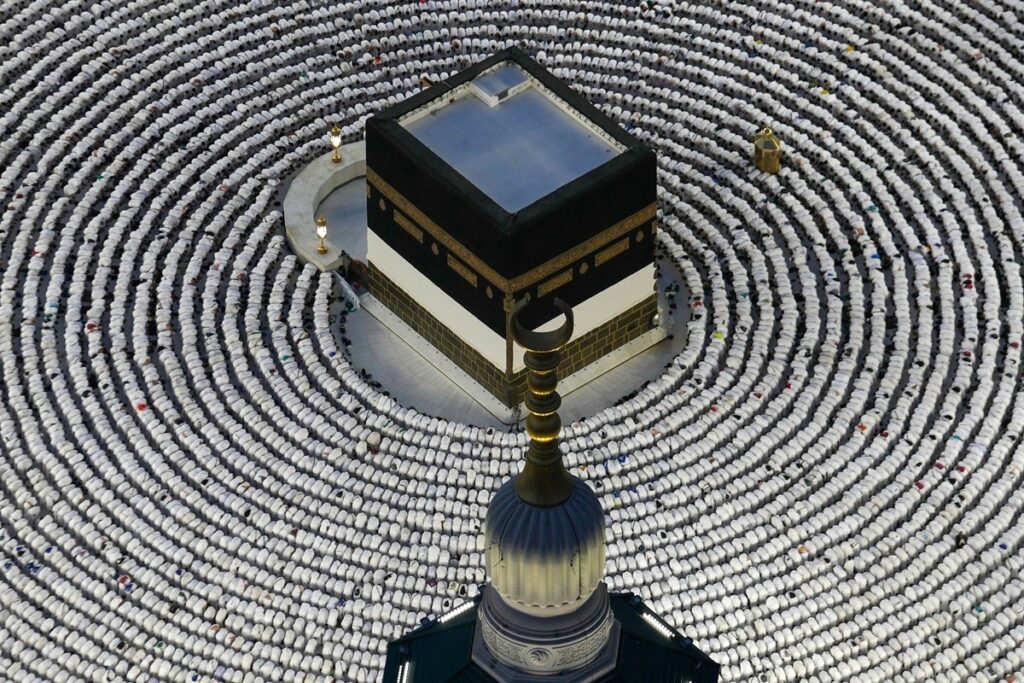
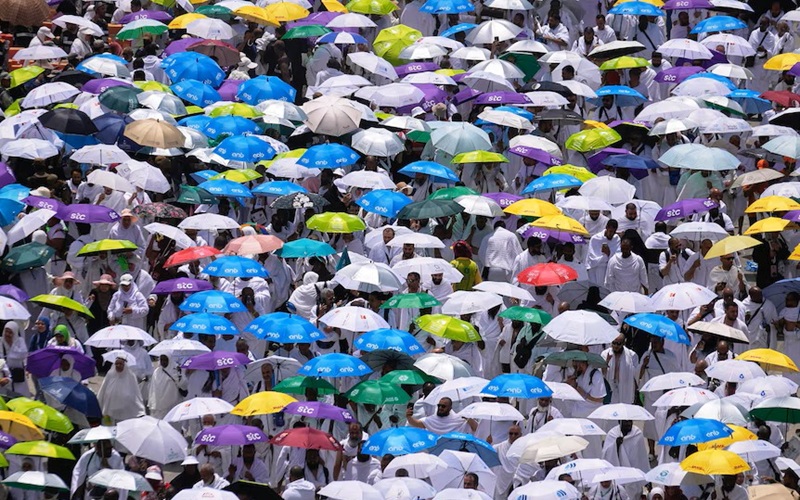
Pilgrims circled the Kaaba at the Grand Mosque in intense heat, many shielding themselves with umbrellas and handheld fans as volunteers distributed water bottles and misting devices.
Youssef Chouhoud, a political scientist from the United States performing Hajj, described the pilgrimage as both physically demanding and spiritually transformative.
“This Hajj is, in effect, a hard reset for me,” he said from Mina. “It is for many pilgrims the most difficult thing they will ever do in their lives. But nothing this meaningful is ever going to be easy.”
He added that he was inspired by seeing fellow pilgrims “compete with one another in giving charity and helping each other along the way”.
Mount Arafat Marks Spiritual Peak of Hajj
On May 26, hundreds of thousands of pilgrims converged on Mount Arafat, where Prophet Mohammed is believed to have delivered his final sermon.
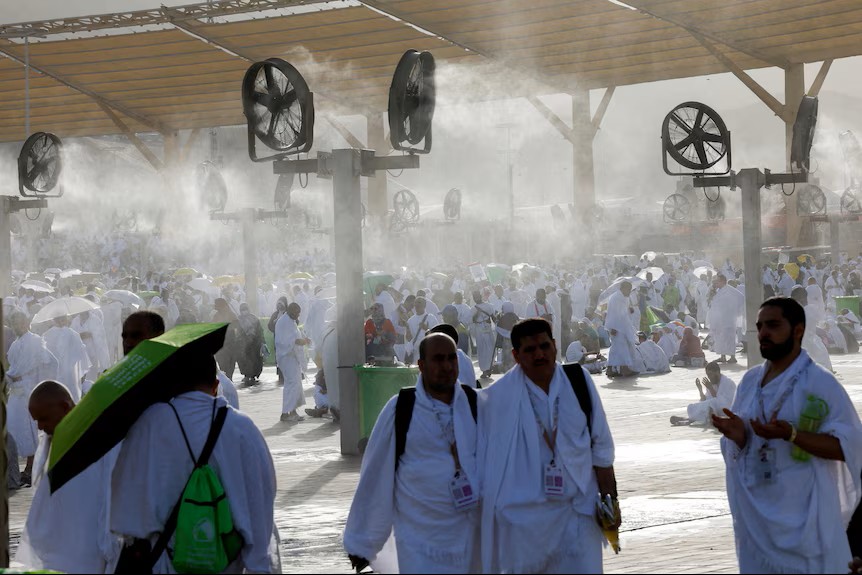
The gathering at Arafat is regarded as the spiritual climax of Hajj, with pilgrims spending hours in prayer and reflection despite temperatures reaching as high as 45C.
“This happens once in a lifetime,” Egyptian pilgrim Mohammad Asal said. “People here have prepared their prayers, hoping that God will respond to them, because we know that … the most important ritual of the Hajj is being in Arafat.”
Saudi authorities deployed extensive security and logistical measures to manage crowds moving between Mina, Arafat and Muzdalifah. Helicopters monitored pilgrim convoys from above while volunteers distributed food packages, water and parasols to worshippers walking under the scorching sun.
After sunset, pilgrims traveled to Muzdalifah, where they spent the night under the open sky and collected pebbles for the symbolic “stoning of the devil” ritual.
Symbolic Stoning Ritual Concludes Major Hajj Rites
On May 27, pilgrims gathered in Mina to perform the symbolic stoning ritual, reenacting Prophet Abraham’s rejection of Satan’s attempts to dissuade him from obeying God’s command to sacrifice his son Ismail.
From dawn, crowds threw pebbles at three large concrete pillars representing the devil in one of the final major rites of Hajj.
The ritual coincided with Eid al-Adha, Islam’s most important festival, which commemorates Abraham’s willingness to sacrifice his son before divine intervention replaced the sacrifice with a goat.
Following the stoning ritual, pilgrims returned to Mecca to perform a final circumambulation of the Kaaba before concluding the pilgrimage.
Saudi Arabia Expands Digital and Safety Measures
Saudi authorities said this year’s Hajj operation involved expanded technological and organizational measures aimed at improving safety and efficiency.
The number of personnel supporting Hajj operations increased to 441,049 from 420,070 last year. Authorities also enhanced surveillance technologies, crowd-monitoring systems and coordination between security, health and logistical agencies.
Officials highlighted the growing use of drones to supply medical clinics across Mecca, Mina and Arafat, helping health workers respond more quickly to heat-related illnesses while avoiding congested roads.
The Makkah Route Initiative, which allows pilgrims to complete immigration and customs procedures before departing their home countries, served 388,694 pilgrims this year, up 23.7% from 314,337 in 2025.
Saudi officials said the continued digitalization of services and improved crowd-management systems contributed to smoother pilgrim movement and more efficient operations throughout the Hajj season.