

Experts from Asia and Europe gathered in Turkmenistan for the first International Atomic Energy Agency (IAEA) interregional workshop on materials outside regulatory control (MORC), aimed at strengthening efforts to prevent, detect, and respond to criminal or unauthorized acts involving nuclear and other radioactive materials.
Held in Ashgabat from April 20 to 24, 2026, the week-long workshop brought together 21 participants from 12 countries to exchange knowledge, share practical experiences, and discuss strategies for enhancing nuclear security regimes amid evolving global threats.
Focus on Prevention, Detection and Response
The workshop addressed a range of issues related to materials outside regulatory control, including legislative and regulatory frameworks, threat assessment, detection and response measures, deterrence, and the promotion of nuclear security culture.
Opening the event, Elena Buglova, Director of the IAEA’s Division of Nuclear Security, underscored the importance of strengthening international cooperation and sustainable security measures.
“Missing, lost, improperly disposed of, or stolen radioactive material is a reality that cannot be overlooked,” said Elena Buglova, Director of the IAEA’s Division of Nuclear Security, at the workshop opening. “The IAEA’s new training provides a comprehensive overview of the essential elements of a nuclear security regime and addresses key aspects of sustainability and the importance of international cooperation in strengthening effective nuclear security regimes.”
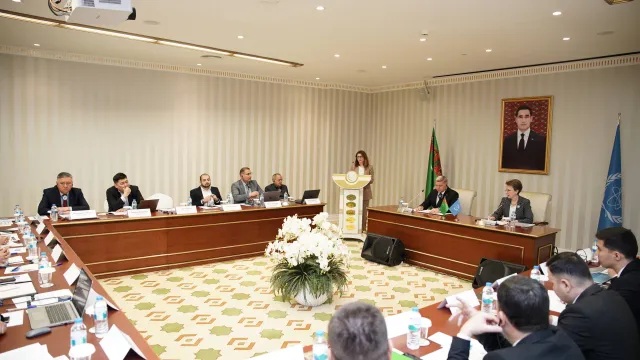
Participants also explored national approaches to managing materials outside regulatory control and examined effective practices for detecting, responding to, and managing such incidents.
Strengthening National and Regional Capacity
According to organizers, the workshop served as a platform for enhancing regional collaboration and reinforcing the capabilities of national authorities responsible for nuclear security.
“The workshop programme highlighted the importance of coordination among competent authorities and the need for continuous capacity building in this field,” said Dayanch Charyyev, Senior Specialist in the International Cooperation Division at the Civil Defense and Rescue Operations Directorate of Turkmenistan’s Ministry of Defense.
“For Turkmenistan, this workshop reaffirmed our commitment to maintaining a strong nuclear security regime in line with IAEA guidance and international best practices. We believe the knowledge shared during the workshop will support participants in further improving national systems and regional collaboration,” he added.
Expanding Cooperation with the IAEA
Alongside the workshop, the IAEA held bilateral meetings with representatives of several Turkmen ministries to discuss potential areas for future cooperation.
The event followed high-level engagement between Turkmenistan and the IAEA earlier in April. During an official visit to the agency’s headquarters in Vienna, IAEA Director General Rafael Mariano Grossi met with Gurbanguly Berdimuhamedov, Chairman of the People’s Council of Turkmenistan and National Leader of the Turkmen people.
The workshop reflects growing international efforts to strengthen nuclear security frameworks and improve coordination among countries in addressing risks associated with radioactive materials that fall outside regulatory control.